
Horizontal Radiators White: Choosing White Horizontal
You're probably looking at a wall in your home right now and thinking two things at once. The old radiator works, but it looks dated. And every replacement you've seen online seems to force a choice between decent heat and a finish that suits the room.
That's where white horizontal radiators make sense. They fit the layout most UK homes already have, they work naturally under windows and along wider walls, and they don't fight with the rest of your décor. But there's a catch. Buying the right one isn't just about picking a width and clicking checkout. You need the right output, the right material, and, more often than people realise, the right white finish.
A lot of guides stop at “white goes with everything”. That's only half useful. In practice, gloss white, satin-style white, and matte or pearl-style whites behave differently in day-to-day living. Some wipe down easily. Some hide fingerprints better. Some collect dust more noticeably. If you're buying your first designer radiator, those details matter just as much as the style on the product page.
The Modern Appeal of White Horizontal Radiators
White horizontal radiators have stayed popular because they solve two problems at once. They heat the room without stealing visual attention, and they fit the wall shapes most homes already have. If you're renovating a living room, replacing tired compact radiators in a bedroom, or updating a kitchen, a horizontal format usually gives you the simplest route to a cleaner finish.
The appeal isn't just that they look neat. It's that white works with changing interiors. You can repaint the walls, swap flooring, change curtains, or move from traditional furniture to something more contemporary, and the radiator still fits. That matters if you want a purchase that won't feel dated when the rest of the room evolves.
Why horizontal still works so well
A horizontal radiator suits the practical realities of UK room layouts. Many homes have windows, sofas, sideboards, or chimney breasts that make wider, lower heating easier to place than tall vertical options. In those cases, horizontal radiators white homeowners choose often feel less like a design gamble and more like the sensible answer.
There's also a visual reason they work. A white radiator against a pale wall blends in and keeps the room feeling open. Against a deeper wall colour, it creates a crisp outline without becoming heavy or dominant.
Practical rule: If you want the radiator to support the room rather than lead it, white is usually the safer finish than darker tones.
Where they suit different interiors
They're not only for one type of home. A flat-panel white radiator works well in modern spaces where you want straight lines and a sharper look. A white horizontal column radiator suits period homes, cottages, and properties where you want more character around fireplaces, dado rails, or traditional joinery.
That flexibility is what makes them such a strong first purchase. You're not buying a niche statement piece that only works in one setting. You're buying a heating appliance that can improve the room every day, both in comfort and appearance.
How to Size Your Radiator for Perfect Warmth
The most common mistake isn't choosing the wrong style. It's choosing the wrong BTU output.
BTU is a way of measuring how much heat a radiator gives off. The easiest way to think about it is like filling a bath. A small bath needs less water. A large bath needs more. Rooms work the same way. A small, well-insulated room needs less heat. A larger room with more heat loss needs more.
Start with the room, not the radiator
Before you compare models, measure the room properly. You'll want the basic dimensions, then the details that affect heat loss. Those details are what turn a rough guess into a radiator that keeps the room comfortable.
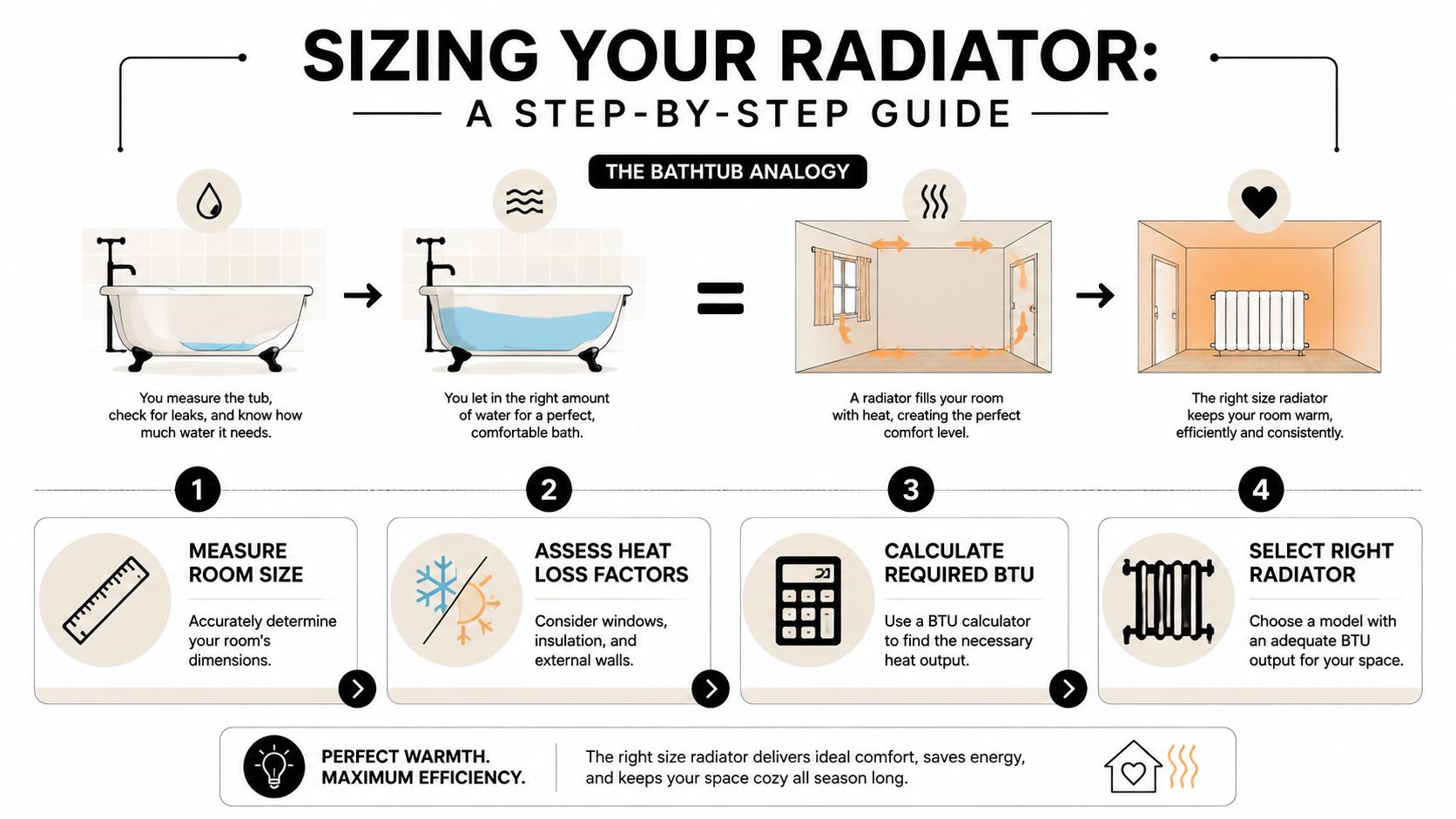
The key checks are usually:
- Room dimensions: Measure length, width, and ceiling height accurately.
- Windows and glazing: Single glazing loses more heat than double glazing, so the room may need more output.
- External walls: A room with more outside-facing walls loses heat faster than one surrounded by heated spaces.
- What's above and below: A heated room above helps. An unheated space can work against you.
- Insulation and orientation: Loft insulation, wall insulation, and whether the room faces colder or sunnier aspects all affect sizing.
If you want a reliable starting point, use a proper BTU chart for radiators rather than estimating from radiator width alone.
What the output figure actually tells you
One useful benchmark is that a white horizontal flat-panel radiator made from 1.5mm low-carbon mild steel, sized 600mm x 836mm as a double-panel unit, typically delivers around 3,136 BTU at ΔT50°C under the BS EN 442 standard, according to this flat-panel radiator specification. That standard matters because it gives you a common basis for comparing products sold in the UK and Europe.
The same source notes that underestimating your BTU requirement by more than 5% can leave a room under-heated. In real terms, that's why experienced installers tend to round up rather than down when a room sits between outputs.
Go slightly too small and the radiator may look tidy on the wall but struggle on cold days. Go sensibly above the requirement and you give the heating system a better chance of reaching comfort without strain.
Use a calculator, then sense-check the result
A calculator is the right tool, but it still needs good inputs. If you enter rough room sizes or ignore glazing and insulation, the result won't help much. It's a common pitfall for homeowners. They shop by appearance first, then try to make the numbers fit afterward.
A useful way to think about sizing in general is the same principle used in other parts of the home. Good proportions matter. The expert advice on ideal fixture sizing from Golden Lighting is about lighting, but the logic carries over well. Measure the space first, understand the surroundings, then choose the fitting.
For radiators, that sequence matters even more because comfort is on the line. Style comes after the room has enough heat.
Choosing the Right Material and Finish
Once the sizing is right, the next decision is what the radiator is made from and how the white finish behaves in real life. Often, first-time buyers misunderstand this aspect. They assume white is just white, and that steel and aluminium are interchangeable. They aren't.
Material comparison in plain terms
For most designer horizontal radiators, the practical choice usually comes down to mild steel or aluminium. Both can work well, but they suit different priorities.
| Feature | Mild Steel | Aluminium |
|---|---|---|
| Heat feel | Steady, familiar radiator warmth | Tends to respond quickly |
| Weight | Heavier | Lighter |
| Cost position | Commonly the more budget-friendly choice | Often chosen when lower weight matters |
| Room suitability | Strong all-round option for many UK homes | Useful where wall loading or quick response is a priority |
| Finish range | Widely available in traditional and modern styles | Also available in designer finishes, though selection varies |
Steel remains the standard choice in a lot of homes because it's durable, straightforward, and available across a wide range of panel and column styles. Aluminium can be attractive where weight matters or where you want a radiator that reacts quickly when the heating comes on, but product choice and budget often shape that decision.
If you're comparing efficiency and response between formats, this guide to the most efficient radiators is a useful follow-on read.
Why steel is still a safe buy
A key detail often missed on product pages is the steel thickness and coating. According to this white flat-panel radiator specification, quality mild steel radiators commonly use a triple-layer powder-coated white finish for corrosion resistance in UK central heating systems, and 1.5mm steel thickness helps the panels resist warping during heat-up cycles.
That same source notes that a 15m² living room in a standard UK home often needs 1,800 to 2,200 BTU output. That doesn't mean every living room should get the same radiator, but it does show why steel panel models are so often chosen. They're available in outputs and sizes that fit everyday rooms well.
Gloss white versus matte and pearl white
This is the part most buying guides skip, even though it affects how happy you'll be with the radiator after installation.
A gloss white finish reflects more light and usually wipes clean more easily. In homes with children, pets, or busy hallways and kitchens, that matters. Dust, marks, and scuffs tend to be easier to spot and easier to remove. If you want low-fuss upkeep, gloss is the practical option.
A matte white or textured white finish gives a softer, more muted look. It can feel more architectural and less shiny, which suits contemporary interiors. The trade-off is maintenance. Textured and matte finishes can hold onto dust more noticeably, especially in high-traffic spaces, and they often need gentler cleaning to avoid spoiling the surface.
Trade-off to remember: Gloss usually wins on wipe-clean practicality. Matte often wins on softness of appearance.
Then there's pearl white, which has been identified in a 2025 trend discussion as a choice for creating a more serene and elegant look in interiors, while the same analysis notes that matte and textured white finishes can trap more dust than gloss finishes, as explained in this designer radiator colour trends article. That's not a reason to avoid pearl or matte finishes. It's a reason to choose them knowingly.
What works and what doesn't
What works:
- Gloss white in busy rooms: Easier to clean and keeps a crisp, classic radiator look.
- Matte or pearl white in calmer spaces: Better where the finish is part of a carefully styled room and cleaning is less frequent.
- Steel for dependable mainstream use: A sensible choice when you want broad style options and proven durability.
What doesn't:
- Choosing finish by photo alone: Online images rarely show how a finish deals with dust or everyday marks.
- Ignoring wall condition: Bright white can highlight poor plaster lines or tired paint around the installation area.
- Treating every white as identical: It isn't. Texture changes both the look and the upkeep.
Styling and Placement in Your Home
Placement changes how a radiator looks and how the room feels around it. A well-chosen white horizontal radiator can disappear into the background or sharpen the whole wall, depending on where you put it and what sits around it.

Under windows and along long walls
Under-window placement remains popular because it makes practical sense. It uses wall space that often can't take furniture and helps offset the cooler feel you get near glazing. In many rooms, that position also keeps pipe runs straightforward when you're replacing an existing unit.
Long, low placement on a wider wall creates a different effect. It can make the room feel more grounded and organised, especially in living rooms and open-plan spaces. White works well here because it doesn't weigh the wall down visually.
If you're looking specifically at lounge layouts, these designer radiators for living rooms show how different widths and styles can sit within real seating and storage arrangements.
Matching radiator style to room character
A modern kitchen often suits a flat-panel white radiator with a clean face and minimal detailing. It sits comfortably alongside handleless units, stone-effect worktops, and simple wall colours. In a bedroom, the same style keeps the room calm and doesn't compete with wardrobes or soft furnishings.
A period-style living room usually benefits from more shape. A horizontal white column radiator can echo original features better than a flat slab design. It feels deliberate rather than inserted as an afterthought.
Here are the combinations that usually look right:
- Minimalist rooms: Flat-panel white radiators with straight edges.
- Traditional interiors: White column radiators with more visible form.
- Family spaces: Gloss white where regular wiping down matters.
- Styled, softer schemes: Pearl or matte white where the finish is part of the design language.
This short video gives a helpful visual sense of how radiator styles can affect a room.
A small finish choice that changes the room
White isn't only about blending in. It can also frame the room. On dark green, navy, or warm grey walls, a white radiator creates a clean line that feels intentional. On white or off-white walls, the radiator recedes and lets furniture and artwork do more of the talking.
Pearl white is worth considering if you want a slightly softer version of that effect. It can look calmer than bright gloss white, though it asks a bit more of you on maintenance. In everyday homes, that's a key styling decision. Not just what looks good on day one, but what still feels right six months later.
Installation Costs and Process
Replacing a radiator is usually straightforward for a qualified installer, but it isn't a casual bolt-on job. The process involves draining the system, removing the existing radiator, checking bracket positions, aligning pipework, refilling, bleeding, and testing for leaks. If the new radiator is a different size or projection, pipe centres and wall fixings may need adjustment.

DIY versus professional fitting
Some homeowners are comfortable with basic plumbing work. If you've handled heating system tasks before, replacing a like-for-like radiator may feel manageable. But the risk isn't just a poor finish. It's hidden leaks, trapped air, poor bracket fixing, or a valve connection that only shows a problem once the system is hot.
A professional fitter brings more than tools. They bring judgement about pipe alignment, valve compatibility, wall type, and whether the chosen radiator suits the location. That's why many buyers prefer to budget for fitting at the same time as they choose the radiator.
A radiator that's slightly off-level or badly supported can spoil the whole result, even if the product itself is excellent.
Why installation planning matters in a renovation
If your radiator upgrade sits inside a bigger project, the timing matters. Wall prep, flooring, decorating, and heating work need to line up properly. Done in the wrong order, you end up repainting behind brackets or lifting finished floors to adjust pipework.
That's one reason heating upgrades often sit alongside other projects that add property value. A better radiator won't carry a renovation on its own, but as part of a coordinated room update, it helps the space feel finished rather than patched together.
For homeowners weighing labour and fitting options, this guide on radiator installation cost is a practical place to compare what's involved before booking work.
Why Choose Bradleys for Your White Radiator
By the time you're ready to buy, key decisions are usually clear. You need the right output for the room, a material that suits your heating setup, and a white finish that matches how you live. That's what separates a good purchase from one that only looks right on a screen.

What a specialist retailer changes
A specialist radiator retailer is useful because the filters, sizing tools, and product range are built around heating decisions, not general homeware browsing. That matters when you're comparing flat-panel white models against white column designs, trying to match wall space, and checking whether a radiator is appropriate for the room rather than attractive in isolation.
Bradleys Radiators offers a built-in BTU calculator, free standard UK delivery, manufacturer warranties in the 5 to 10 year range, and a fixed-cost in-house installation service as part of its designer heating offer. Those details make the buying process more practical because they deal with the questions most homeowners ask before checkout. Can I size it properly, what happens on delivery, how long is the warranty, and who fits it if I don't want to organise separate trades.
Why that matters on a first purchase
First-time buyers often don't need endless choice. They need edited choice. Too many similar products, unclear outputs, and vague finish descriptions create hesitation. A curated range is often more useful than a giant catalogue if the products are clearly presented and the support is built around room-by-room decision-making.
There's also reassurance in buying from a business focused on radiators rather than treating them as an add-on line. If you want the background behind that approach, this article on the story behind Bradleys Radiators gives context on how the company positions its service.
The practical takeaway is simple. White horizontal radiators are easy to buy badly because they seem familiar. They're easy to buy well when you treat output, material, finish, and installation as one joined-up decision.
If you're ready to choose a white horizontal radiator that fits your room properly and looks right once it's on the wall, browse the range at Bradleys Radiators.