
Radiator Installation Cost: A UK Guide for 2026
For a straightforward, like-for-like radiator swap in the UK, homeowners can typically expect to pay between £100 and £300. That's the right starting point, but it is only a starting point.
If you're reading about radiator installation cost, you're likely doing it at exactly the same moment. You're planning a room update, replacing tired old radiators, or trying to price a wider heating job, and every number online seems to contradict the last one. One page gives a simple average. Another throws in labour. Another ignores valves, disposal, pipe changes, and the awkward reality of older UK homes.
That's where budgets go wrong.
A radiator job can look simple from the outside. Take old radiator off, put new radiator on, job done. In practice, the final figure depends on whether the new radiator matches the old pipe centres, whether the valves are reusable, whether the system needs draining and refilling, and whether the walls or floors need remedial work afterwards. Those are the details that separate a clean swap from a quote that suddenly climbs.
Why Is It So Hard to Get a Straight Answer on Cost
A common scenario goes like this. A homeowner picks a new radiator for the lounge, sees a rough online price, and assumes fitting will be a quick add-on. Then the installer arrives, checks the existing pipe positions, notices the new radiator is taller, wider, heavier, or uses different valve centres, and the “simple install” becomes a plumbing alteration.
That's why radiator installation cost feels slippery.
Online calculators usually work best for the easiest job. Same size radiator. Same location. Existing valves are serviceable. Pipework lines up. Access is good. If your property fits that description, the price can stay close to the lower end of the usual range. If it doesn't, those calculators stop being useful very quickly.
Older UK houses are where this catches people out most often. Pipes may have been run around skirting boards years ago, buried in floors, altered during past renovations, or fitted to radiator sizes that aren't what you want now. A modern vertical radiator might suit the room better, but it won't usually go onto old pipework without some adjustment.
Most quote surprises don't come from the radiator itself. They come from what has to change around it.
Sizing causes confusion too. Homeowners often choose by appearance first and heat output second. Then the room still feels cold, or the installer has to discuss a different size or style before fitting. If you're comparing options, a proper radiator heat output calculator helps narrow down what suits the room before money gets spent on the wrong unit.
Why quotes vary so much
Three installers can all be honest and still give different figures because they may be pricing different levels of work:
- Basic swap only. Old radiator off, similar new one on.
- Swap plus parts. New valves, system refill, small fittings included.
- Full adjustment. Pipe changes, disposal, balancing, and minor remedial plumbing built in.
What usually works best
The clearest quotes separate the job into parts. You want to see the radiator cost, labour, valves, disposal, and any pipework changes listed properly. When those items are lumped together, it's harder to tell whether the price is fair or whether key work has been left out.
Typical UK Radiator Installation Price Ranges
A homeowner might budget £200 for a radiator swap, then get a quote closer to £350 once valves, pipe alteration, and disposal are added. That gap is why online averages only help up to a point.
Industry guides give a reasonable starting range for standard work. Checkatrade's radiator replacement cost guide puts a like for like replacement broadly in the £100 to £300 range, with many standard swaps landing around £200 to £300. For whole-house projects, it also gives broad totals of £600 to £1,000 for a 2-bedroom house with 4 to 5 radiators and £900 to £1,600 for a 3-bedroom house with 6 to 8 radiators.

Those figures describe standard jobs. In practice, I treat them as entry-level budgeting numbers, not a price promise.
A straightforward replacement with easy access, existing valves that do not need changing, and pipe centres that match the new radiator will usually stay near the lower end. Costs rise when the new radiator is a different size, the old valves are seized or dated, the brackets need repositioning, or the system needs more time to drain, refill, vent, and balance properly.
The type of project matters as much as the number of radiators. A single radiator can look expensive on paper because the callout, travel, setup, drain-down, testing, and tidy-up are all sitting against one unit. On a larger job, those labour steps are spread across several radiators, so the price per radiator often drops even though the total bill is higher.
That is also why two quotes with the same headline figure can represent different value. One may cover a basic swap only. Another may already include new TRVs, disposal of the old radiator, minor pipework changes, and balancing the system afterwards.
If you are comparing prices locally, ask for that detail before booking a radiator installation service in Preston. The useful question is not just the cost per radiator. It is what the installer has allowed for, and what could still be added once the job starts.
Practical rule: Use published averages to set an initial budget. Use a survey and itemised quote to set the real one.
Deconstructing Your Quote A Detailed Cost Breakdown
A good quote should be readable by a homeowner, not just by another engineer. If you can't tell what's included, you don't yet know the true radiator installation cost.
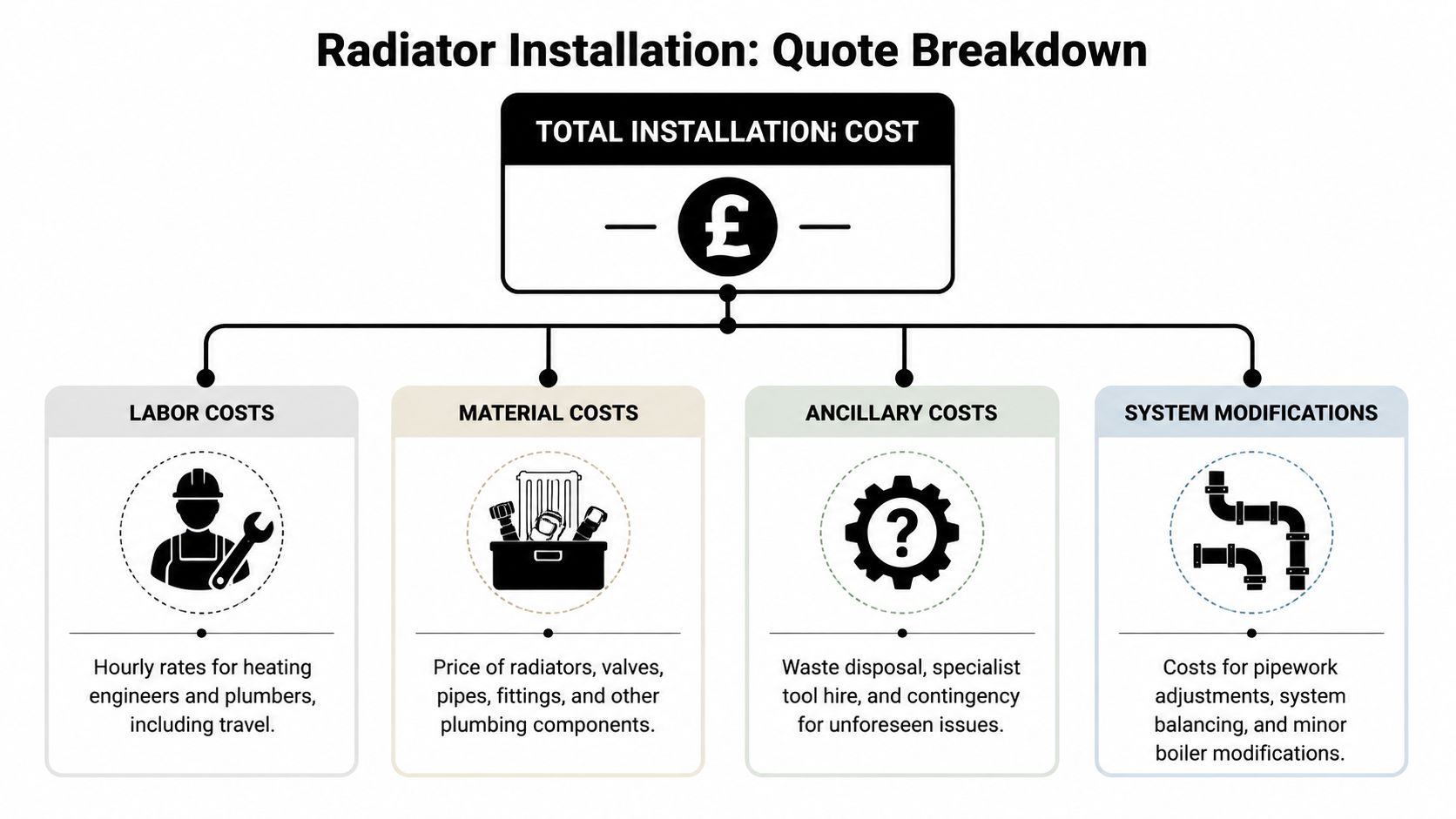
MyBuilder states that a standard radiator replacement typically costs £80 to £300 per radiator including unit and labour, with removal of the old radiator adding £40 to £100 and thermostatic valve installation adding £50 to £150. It also notes that standard installations usually take 2 to 3 hours, which is why labour forms such a noticeable part of a small job in its radiator replacement cost guide.
The main parts of a radiator quote
Here's what should normally appear.
- Radiator supply. This is the actual unit. A standard compact panel radiator is one thing. A column, cast iron, aluminium, or designer vertical model is another. The style affects both product cost and fitting time.
- Labour for fitting. This covers isolation, drain-down where needed, removal, hanging the new radiator, reconnecting, refilling, venting, and checks.
- Valves and fittings. Manual valves, lockshields, or thermostatic radiator valves can be reused in some cases, but not always. If they're old, seized, mismatched, or wrong for the new radiator, they should be replaced.
- Old radiator removal. Disposal is often an extra charge rather than automatically included.
- System work. Refilling, bleeding, checking for leaks, and balancing the radiator so it heats correctly all take time.
A useful technical explainer on pipe sizes and radiator valves helps show why a valve choice that looks minor on paper can affect the whole fitting process.
What often sits in the small print
Some of the most important costs are easy to miss if they're buried in one line.
| Quote item | What it usually covers | Why it matters |
|---|---|---|
| Labour | Fitting time on site | Small jobs are labour-heavy |
| Valves | New manual or TRV sets | Old valves often spoil a neat install |
| Disposal | Taking away the old radiator | Not every quote includes it |
| Pipe alterations | Adjusting existing connections | This is where simple jobs become complex |
| Final checks | Refill, bleed, test, balance | Without this, the job isn't really finished |
Before watching any fitting videos, it helps to understand that real jobs vary by property, pipe route, and radiator type. This walkthrough gives a decent visual sense of the process:
Questions worth asking before you approve the quote
- Are new valves included, or is the price based on reusing the old ones?
- Is old radiator removal included, or charged separately?
- Does the quote assume existing pipework lines up, or allow for changes?
- Will the system be fully refilled and checked afterwards, including bleeding and balancing?
If those answers aren't clear, ask for the quote to be rewritten in plain terms.
Key Factors That Influence Your Final Cost
Two radiator jobs can look almost identical on paper and still come out at very different prices. The difference usually sits in the existing setup. Pipe positions, wall condition, access, and the amount of remedial work needed all change the time on site, and time is what pushes a quote up or keeps it sensible. That is why online cost calculators often miss the mark for UK homes, especially older properties where previous alterations have left awkward pipe centres or uneven walls.

Pipe centres and existing plumbing
Pipe alignment is one of the first things I check.
If the new radiator matches the old one closely, the work is usually straightforward. If the centres are out, even by a modest amount, the installer may need to alter copper tails, extend pipework, or change the entry point from the floor or wall. That adds labour and can also affect how neat the finished job looks.
Older houses catch people out here. You remove the old radiator and find pipework that was fitted around a discontinued size years ago, or pipes that are no longer level after floor changes. The radiator itself may be the easy part. Getting the new one to sit properly without leaving crooked tails or stressed valves is what takes the time.
Radiator type and weight
Radiator choice changes the fitting method, not just the purchase price.
A standard panel radiator is usually quick to hang if the wall is sound and the brackets line up well. A vertical model, a column radiator, or cast iron sections can take longer to position, support, and connect cleanly. Weight matters. Wall construction matters too. Solid brick, blockwork, dot and dab plasterboard, and tired lath-and-plaster walls all call for different fixings and sometimes a different approach altogether.
This is one reason a designer radiator often costs more to install even before any pipe changes are made. You are paying for more careful fitting, not just for a different shape.
System condition, draining down, and refill protection
The condition of the heating system can change the quote before a spanner even touches the wall. Old valves may not shut off cleanly. Sludge in the system can make draining and refilling slower. A system that has been topped up repeatedly may need extra attention to get circulating properly again once the new radiator is in place.
Fresh inhibitor is a small line item compared with labour, but it protects the work you have just paid for. Homeowners who want the detail can read more about inhibitor for central heating systems.
Access and finish around the job
Access is rarely mentioned in online averages, but it affects labour in a very practical way. A radiator in a clear bedroom with exposed pipes is one thing. A radiator behind furniture, under deep window boards, inside a tight loft conversion, or on a freshly decorated wall needs slower, more careful work.
Then there is the finish around the plumbing. If pipes are moved, floors may need lifting and relaying. If you want concealed pipework, there may be chasing, patch plastering, or decorating afterwards. Many plumbing quotes quite reasonably stop at making the heating work properly again. The cosmetic making good often sits outside that price, so it needs its own budget.
Factors that usually push the quote up or down
- Pushes cost up: pipework alterations, awkward access, heavier radiators, poor wall condition, replacement valves, hidden old pipe routes, and making good after the plumbing work.
- Keeps cost down: like-for-like swaps, accessible exposed pipework, sound walls, valves that are suitable to reuse, and several radiators fitted in the same visit.
The lesson is simple. A fair radiator installation price reflects how much has to change from the current setup, not just how many radiators are on the order.
Sample Pricing Scenarios From Simple to Complex
A homeowner often starts with a simple question. “How much to fit a radiator?” The answer changes fast once the actual room, radiator style, and existing pipework are on the table. These examples show why online calculators only get you so far.
Scenario one simple swap
A straightforward bedroom swap is the closest thing to a budget-friendly installation. The old radiator comes off, the new one goes back in the same position, and the existing pipe centres are close enough that the engineer is not reworking the plumbing.
A standard quote for this sort of job usually covers removal of the old radiator, fitting the new one, refilling and venting the system, and checking that it heats correctly. Valves are the usual point where the price changes. If the old pair are worn, seized, or the new radiator needs a different style, that cost is normally added rather than absorbed.
This is the type of job that sits near the lower end of the usual price range.
Scenario two designer upgrade
Now take a lounge where a horizontal panel radiator is being replaced with a vertical designer model. The radiator itself may be the main purchase, but the installation is often the bigger change than homeowners expect.
Pipe tails rarely line up neatly with the new connections, so pipework alterations are common. Valve positions often need changing too. Weight matters as well, especially on older plasterboard walls or where fixing points do not line up with solid support. If you are choosing a heavier model, proper fixing is part of the cost, not an optional extra. We cover that in more detail in our guide to proper wall support for heavy radiators.
That is why a designer upgrade can cost noticeably more than a like-for-like swap, even before any decorating or wall repairs are considered.
Scenario three full house replacement
A full replacement across a typical 3-bedroom house can look better value per radiator, but only if the specification is sensible and the work is organised well. There is less repeated setup time when several radiators are changed in one visit, and drain-down, refill, and testing are handled as one job.
The risk is that small extras multiply across the property. New valves on every radiator, a couple of awkward pipe alterations, one or two walls that need better fixings, and disposal of the old units can move the final figure more than homeowners expect. On larger jobs, the labour rate per radiator may improve, but the total bill still depends on how many rooms are true swaps and how many are really redesigns.
Estimated Radiator Installation Cost Scenarios 2026
| Component | Scenario 1: Simple Swap | Scenario 2: Designer Upgrade | Scenario 3: Full House (7 Rads) |
|---|---|---|---|
| Radiator type | Standard like-for-like replacement | Vertical or designer replacement | Mix of whole-house replacements |
| Pipework changes | Usually minimal | Often required | Varies by room |
| Valve work | May reuse or replace as needed | Often replaced to suit new layout | Common to replace across several rooms |
| Labour intensity | Lower | Higher | Spread across the project |
| Disposal | Sometimes extra | Sometimes extra | Usually best priced as part of the job |
| Likely budget position | Near the lower end of standard ranges if truly like-for-like | Above a basic swap because fitting is more involved | Guided by the number of straightforward rooms versus altered rooms |
What these scenarios tell you
The installed cost follows the amount of change, not just the radiator you picked.
A cheap radiator can become an expensive job if it triggers pipework alterations, valve changes, stronger wall fixing, or finishing work around the area. A more expensive radiator can still be good value if it suits the existing layout and goes on without much adaptation. That is the part many online averages miss, and it is usually the reason one quote looks much higher than another for what seems like the same job.
Getting a Fixed Price Quote with Bradleys
Once you've seen how many moving parts sit behind radiator installation cost, the value of a fixed price quote becomes obvious. Homeowners don't want a vague estimate followed by a list of surprises once the engineer starts exposing old pipework.

A proper fixed price process works best when the installer knows exactly what radiator is being fitted, where it's going, what condition the existing system is in, and whether valves or pipe changes are needed. That gives the customer a quote based on the actual job rather than a generic allowance.
What a better quote should include
- A clear scope of work so you know whether it's a direct swap or includes plumbing alterations.
- Parts listed properly including radiator, valves, and fittings where relevant.
- Removal and disposal explained so you're not left with the old radiator in the garden or garage.
- Assumptions stated in writing such as whether existing pipework is reusable.
Why fixed pricing matters on heating jobs
Heating work often interacts with older systems, existing decoration, and room layouts that don't match modern radiator sizes. That's exactly why transparent pricing matters more here than it does on many simpler home jobs.
If you're buying the radiator and the fitting service from the same specialist, there's usually less room for mismatch between what was ordered and what can be installed. That tends to make the whole job smoother, especially when style, output, valve choice, and fitting method all need to line up.
How to Save Money on Your Radiator Installation
The best way to save money isn't to chase the lowest quote. It's to avoid paying twice for the wrong radiator, the wrong valves, or preventable pipe alterations.
One of the biggest trade-offs buyers miss is that a more expensive radiator can either save money overall or move the cost elsewhere. General pricing guidance shows wide variation by radiator type, with electric and taller designer formats typically costing more than standard hot-water units, and labour can also rise when specialist wiring or more complex fitting is involved, as discussed in Warmup's review of replacement cost factors.
Practical ways to keep costs under control
- Install several radiators together. If you already know more than one radiator needs changing, doing them in one project often makes better use of labour and system drain-down time.
- Choose a radiator that suits the existing layout. If you can find a model that works with the room and stays close to existing pipe centres, fitting is usually simpler.
- Don't ignore valve condition. Reusing poor valves to save money often leads to a messier finish or another visit later.
- Check heat output before buying on looks alone. A radiator that fits the wall but doesn't heat the room properly is false economy.
- Think in total job cost, not unit cost. A cheap radiator that needs pipework changes, new controls, or electrical work may cost more overall than a better-matched alternative.
Buy the radiator for the room, not just for the photo on the product page.
Where homeowners overspend
The most common overspend comes from changing style late in the process. Someone prices a standard replacement, then falls in love with a vertical anthracite model after the quote. There's nothing wrong with that choice, but the budget needs revisiting because the installation may now be a different job.
The second mistake is treating every quote as comparable when they don't include the same things. One installer may price only the fit. Another may include valves, disposal, refill work, and minor pipe adjustments. The cheaper number isn't always the cheaper outcome.
If you want a radiator and installation service that's priced according to the actual work rather than a vague allowance, Bradleys Radiators offers a practical route from selection through to fitting. You can choose the right style for the room, get clear guidance on what affects installation cost, and arrange a fixed-cost service with qualified in-house engineers so there's less guesswork, fewer mismatches, and a much cleaner budgeting process.