
Inhibitor Central Heating: Essential Guide 2026
You've fitted striking new radiators, redecorated the room, and finally got the look right. Then the practical question arrives. How do you protect that investment once those radiators are connected to an older heating circuit full of existing water, mixed metals, and years of unseen wear?
That's where inhibitor central heating treatment stops being a trade-only phrase and becomes something every homeowner should understand. It isn't just about avoiding dirty water in the system. It's about protecting boiler parts, keeping radiators heating properly, and making sure new components aren't dropped into conditions that shorten their life from the start.
Protecting Your Investment in Warmth and Style
A common renovation sequence goes like this. The old panel radiators come off, new statement radiators go on, the room feels finished, and everyone moves on to the next job. What often gets overlooked is the water those new radiators are joining.
That matters most when you've upgraded a visible room, such as a lounge, with a style-led model like those in this collection of designer radiators for living rooms. The outside may be brand new, but the inside of the system may still contain the conditions that cause corrosion and sludge to form over time.
UK heating guidance treats inhibitor as maintenance, not a nice extra. It's commonly recommended after installation, repairs, and cleaning because untreated systems can suffer efficiency losses, boiler faults, and premature component wear, as explained in this overview of why central heating inhibitor matters.
Why homeowners get caught out
The confusion usually comes from how the work is described.
A homeowner hears:
- “The radiators are installed” and assumes protection is included
- “The system was drained” and thinks fresh water is harmless
- “It's been flushed” and believes the job is complete
Fresh water is useful during work, but once it enters the system, the chemistry changes. Metals, water and oxygen don't coexist without consequences. Left untreated, that internal environment starts working against the boiler, valves, pump and radiators.
New radiators improve the look of a room in a day. Inhibitor helps protect their performance for the years after fitting.
Think of inhibitor as the unseen part of the installation. You don't admire it like a new anthracite vertical radiator, but it's one of the things that helps that radiator stay efficient and clean internally.
What Is Central Heating Inhibitor and How Does It Work
Central heating inhibitor is a chemical liquid added to the water inside a closed-loop heating system. Its job is to reduce the internal reactions that lead to corrosion, sludge and scale.

Think of it as an internal shield
The easiest way to understand it is this. Your heating water touches a lot of metal surfaces on its journey through the system. Radiators, pipework, valves, pump components and the boiler heat exchanger all sit in that same loop. Without protection, water and dissolved oxygen can react with those metals.
Inhibitor works by helping create a microscopic protective layer on internal surfaces. That layer reduces direct attack on the metal. This functions as a clear protective film inside the system. You can't see it, but it changes how the water behaves against the metal.
That one job helps reduce two familiar problems:
- Corrosion leads to rust products and sludge
- Scale forms deposits that interfere with heat transfer and flow
Why this matters in day-to-day use
You don't notice corrosion starting. It develops unseen inside parts you never see. But the symptoms show up later as radiators that don't heat evenly, sticky valves, dark water when the system is opened, or a boiler that seems less happy than it used to be.
Scale causes a different kind of trouble. Instead of dirty sludge, you get mineral deposits building where you want efficient heat exchange. That makes the system work harder to move heat from boiler to room.
Practical rule: inhibitor doesn't fix existing contamination. It helps stop new contamination from forming as the system runs.
That distinction is why homeowners often confuse cleaning products with inhibitor. One is there to deal with what has already built up. The other is there to protect what you've just cleaned, repaired or installed.
It's part of system care, not a separate extra
If you've been dealing with uneven radiator heat, it's easy to focus only on balancing, which is still important. But balancing and water treatment solve different problems. One sets flow. The other protects the internals. If you're already sorting heat distribution, this guide to how to balance central heating radiators helps with the flow side of the job.
The simplest summary is this:
Inhibitor is the fluid protection that helps a closed heating system stay clean inside, resist corrosion and scale, and keep working as intended over time.
The Key Benefits of a Properly Dosed System
Inhibitor isn't bought because of an enjoyment of heating chemicals. It's used because of what happens when a system goes without it.

Better radiator performance
Sludge doesn't spread itself neatly. It tends to settle in places where flow slows down, especially at the lower sections of radiators. That's why homeowners often complain that the top is warm but the bottom stays cool, or that one room never seems to catch up.
If that sounds familiar, the fault might not be the radiator itself. Symptoms like these often overlap with the issues covered in why a radiator might not be heating up properly, but internal contamination is a frequent part of the story.
A properly protected system is less likely to keep producing the debris that causes those cold areas.
More reliable boiler operation
Boilers dislike dirty system water. So do pumps and motorised valves. When corrosion products circulate, they don't stay politely inside one radiator. They travel. Small passages and moving parts are often the first places where problems show up.
You may notice:
- Noisier operation when deposits affect heat exchange
- Repeated faults after draining or repair work if protection isn't restored
- Poor circulation when debris interferes with components
This isn't about magic efficiency gains. It's about avoiding the gradual loss of performance that comes from letting the system water deteriorate.
Longer service life for system components
Homeowners often focus on the boiler because it's the most expensive single item. But radiators, valves, pumps and heat exchangers all rely on decent water quality. In a mixed-metal system, that becomes even more important because different materials can react differently within the same circuit.
A decent dose of inhibitor helps protect the full route the water travels, not just one component.
The practical benefits you actually notice
Here's what people usually care about in real life:
- Fewer nuisance issues such as sticking valves or patchy heat
- Cleaner internals after new work has been completed
- Steadier performance across older and newer parts of the same system
- Less risk to newly fitted radiators joining an untreated circuit
A well-dosed system won't make a bad installation good. It will help a good installation stay good.
That's the point many homeowners miss. Inhibitor isn't a performance gimmick. It's protective maintenance that helps preserve the system you already paid for.
Choosing the Right Inhibitor for Your Radiators
You fit new designer radiators, refill the system, and expect the job to be finished. The part many homeowners miss is what happens next inside the water. If those new radiators are joining older pipework, valves and a boiler with years of history behind it, the inhibitor has to suit the whole circuit, not just the new metal on the wall.
That matters most after a flush, a drain-down, or a radiator upgrade. Fresh water brings oxygen back into the system, and oxygen is what starts corrosion moving again. Inhibitor is the protective layer that helps slow those reactions before they turn into sludge, pinholes or sticking components.
Start with the metals in the system
Begin with a simple question. What is the water touching from one end of the circuit to the other?
A house may have steel panel radiators downstairs, an aluminium designer radiator in the kitchen extension, older iron components in the original pipework, and a boiler heat exchanger made from a different metal again. Those materials all share the same water, so the product needs to be suitable for mixed-metal heating systems if there is any doubt.
This catches people out after renovation work. They choose a radiator by size and appearance, install it properly, then treat inhibitor as a generic add-on. In practice, the chemistry needs to match your existing system.
If you are still deciding on heat emitters for a glazed room or extension, this guide to the best radiators for conservatories is a useful starting point because material choice affects more than appearance.
Why product choice changes from one home to another
An inhibitor works like a protective film inside the system. It helps reduce the chemical reactions between water, oxygen and metal surfaces. The right product can protect steel, cast iron, copper, brass and, where stated on the label, aluminium as well.
The phrase "where stated on the label" is important. Aluminium is less forgiving than many homeowners realise. If your system includes aluminium radiators or aluminium components inside the boiler, do not assume every standard inhibitor is suitable. Check the manufacturer's wording carefully.
Older systems also need a bit more thought. If the water has a history of sludge or the system has just been cleaned after years of build-up, choosing an inhibitor for mixed metals is only part of the job. You also want a product intended for closed domestic central heating systems, with dosing instructions that make sense for a full refill or a partial top-up.
Inhibitor compatibility by radiator material
| Radiator Material | Recommended Inhibitor Type | Key Considerations |
|---|---|---|
| Steel | A product stated as suitable for closed heating systems and mixed metals | Common in modern systems. Check label instructions after any drain-down or partial refill. |
| Aluminium | A product specifically described as suitable for systems with aluminium components | Aluminium compatibility should be clearly stated on the product. |
| Cast iron | A product intended for older closed-loop systems and mixed materials | Older systems may contain existing deposits, so cleaning and protection often need to be considered together. |
| Mixed-metal system | A mixed-metal compatible inhibitor | Usually the safest choice where new radiators have been added to older pipework and components. |
Common buying mistakes
One mistake is buying on brand recognition alone. A familiar name does not remove the need to check compatibility, especially in a system that mixes old and new materials.
Another is treating all drain-downs the same. Replacing one radiator in a small loop is different from refilling the whole system after a flush. The amount of inhibitor needed depends on how much water was removed and what the product instructions say.
There is also the cleaner-versus-inhibitor mix-up. A cleaner is used to remove debris and deposits. An inhibitor is the protective treatment added after cleaning or refilling. They do different jobs.
What to check before buying
Use this checklist before you pour anything in:
- System metals: Check for steel, aluminium, cast iron, copper and brass across the whole circuit.
- Product wording: Make sure it is intended for domestic closed heating systems.
- Aluminium suitability: Confirm this specifically if any aluminium components are present.
- Dose guidance: Buy enough for the system volume or the amount of fresh water added.
- Application method: Check whether it can be added through a radiator, filter, filling loop accessory or dosing point.
If you are unsure, treat the system as mixed-metal and choose a product clearly labelled for that use. That is usually the safest call for homes where new radiators have been added to an older heating system.
A Step-by-Step Guide to Adding Inhibitor
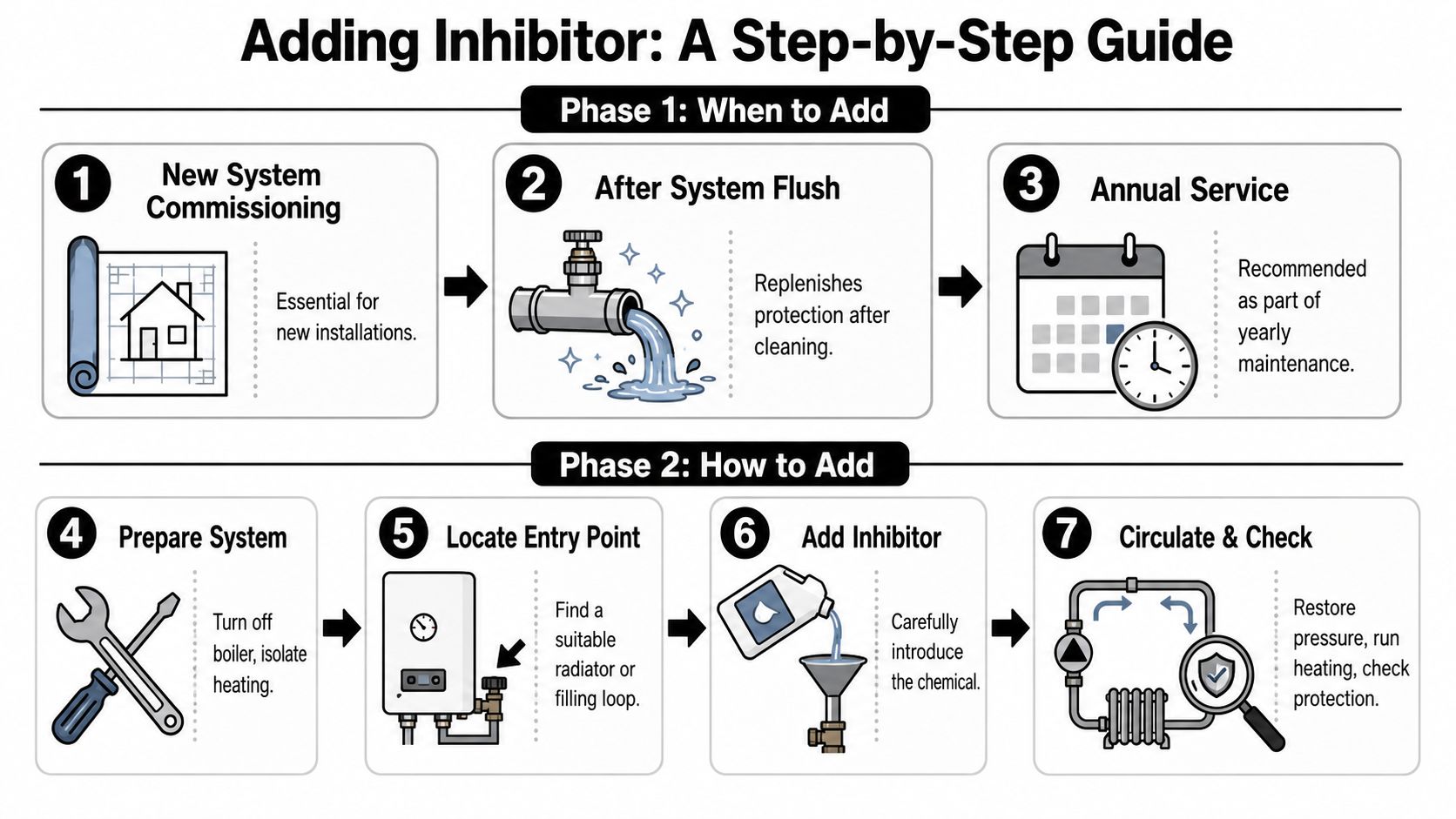
The right time to add inhibitor is usually after work that introduces fresh water into the system. That includes first commissioning, major repairs, draining down for radiator changes, and after a proper clean.
Get the dose right first
This is the part people often skip. Dosing is typically based on system volume, not guesswork. The 4Trade technical data sheet specifies a dose rate of 0.5% of total system volume, and states that one 500 ml container is sufficient for a 100-litre / 10-radiator system, as shown in the 4Trade central heating inhibitor technical data sheet.
That doesn't mean every home automatically needs one bottle. It means you should work from the system volume and the product instructions. If your system is larger, smaller, or only partially drained, size the dose accordingly.
Before you start
Have these basics ready:
- Correct inhibitor product for your system materials
- A filling method suited to the system and product
- Cloths or towels for minor spills
- A radiator bleed key or suitable tools if you're dosing through a radiator
- Pressure knowledge for sealed systems, so you can restore pressure afterwards if needed
This video shows the kind of process homeowners often want to see before they try it themselves:
Method for a typical sealed domestic system
The precise method depends on the system layout and product format, but the general process is straightforward if you're competent and careful.
Turn the heating off and let it cool
Don't work on a hot system. Give radiators and pipework time to cool so you're not opening anything under heat.Choose the entry point
Many homeowners add inhibitor through a radiator. Others use a suitable dosing point if one exists. Pick the method recommended for the product you're using.Protect the area
Put cloths down below the work point. Even a tidy job can release a little water.Introduce the inhibitor carefully
Follow the product instructions exactly. If you're adding through a radiator, make sure you understand how to isolate and reopen it correctly before you start.Refill and restore pressure if required
On a pressurised system, check the pressure afterwards and return it to the normal operating range for your setup.Run the heating
Circulate the treated water through the full system so the inhibitor reaches every part of the circuit.Check for proper operation
Look for normal heating, correct pressure and any signs that a valve or bleed point wasn't resealed properly.
Don't add inhibitor by rough guess after a drain-down. Protection depends on the correct concentration being restored.
When to leave it to a heating engineer
Call a professional if:
- You're not sure how much water the system holds
- The system has mixed metals and an unknown service history
- You're opening radiator connections rather than using a simple dosing point
- The boiler has recently faulted or the drained water looked heavily contaminated
- You're unsure about repressurising the system safely
If you're already learning the hardware side of your setup, this guide to radiator valves explained helps make sense of the fittings you'll see around each radiator.
Recognising Problems and Maintaining Protection
You flush the system, fit a smart new radiator, top everything back up, and expect the job to be finished. A few weeks later, one radiator is cooler at the bottom, the boiler sounds rougher than before, and you start wondering whether the old system water is attacking the new parts. That is usually the moment inhibitor starts to make sense.

Signs your system water may need attention
Central heating problems often build gradually. The clues are small at first, but they tend to appear in a pattern.
- Cold spots near the bottom of a radiator often mean sludge or magnetite has settled where water flow slows down
- Kettling or boiler noise can point to deposits forming on hot surfaces inside the boiler or heat exchanger
- Very dark water from a drain point or radiator bleed suggests corrosion products are circulating in the system
- Radiators that need bleeding again and again can indicate ongoing internal corrosion or instability in the system water
- New problems after recent plumbing work often mean fresh water was added but the protective dose was not restored
One sign on its own does not prove the cause. Seen together, they usually point to poor water condition rather than a single faulty radiator.
After a flush, do you still need inhibitor
Yes.
A flush removes the mess that is already in the system. Inhibitor helps stop the next round from forming. They do different jobs, in the same way that washing mud off a car is not the same as adding wax to protect the paint afterwards.
This is the practical point homeowners usually want answered. If you have paid for a flush, or you have just added new designer radiators to an older pipework circuit, clean water alone is not enough. Fresh water brings oxygen and minerals with it. Once that water is heated and circulated through steel, copper, aluminium, valves, and the boiler, the conditions for corrosion start again unless the system is treated.
That matters even more in mixed-age systems. A brand-new radiator connected to older pipework is only as well protected as the water running through all of it.
Ongoing maintenance
You do not need to monitor the system constantly, but you do need a few sensible checks, especially after any drain-down, repair, leak, or radiator swap.
A practical routine looks like this:
- Ask what was put back in after any work. Do not assume a plumber or contractor re-dosed the system unless they confirm it.
- Pay attention to changes in behaviour. Noisier running, slower warm-up, or uneven heat are worth checking early.
- Test the system water if there is any doubt. An inhibitor test can show whether meaningful protection is still present.
- Treat topping up as a warning sign. Every addition of fresh water can dilute the chemical protection already in the system.
- Review protection during servicing. It is a good point to check water quality before small issues turn into blocked radiators or boiler trouble.
The simple rule is this: cleaning resets the system. Inhibitor helps keep it stable afterwards.
Frequently Asked Questions About Inhibitor
Can you mix different inhibitor brands
It's better not to unless the product manufacturer specifically says it's acceptable. Different formulas may not be intended to work together. If you don't know what's already in the system, a heating engineer may recommend testing, partial replacement, or a fresh treated fill after cleaning.
How long does inhibitor last
In a sealed system, inhibitor can remain effective for a long time, but it won't look after itself. Draining, topping up with fresh water, leaks, repairs, or radiator swaps can reduce protection. The practical answer is to check it during servicing and after any work that alters the system water.
Is inhibitor dangerous to handle
Treat it as a chemical product, not as something casual. Follow the label, avoid skin and eye contact, and keep it away from children and pets. Most problems come from careless handling rather than normal use, so gloves, cloths and a tidy working method go a long way.
Will inhibitor stop a leak
No. Inhibitor is for corrosion and scale control. It isn't a leak repair product. If a radiator, valve or joint is leaking, fix the mechanical fault first.
Do new radiators always need inhibitor if the old system seemed fine
Yes, if fresh water has been introduced or if the system has been drained for installation work. New radiators don't stay “new” internally for long if they're connected to poorly protected system water.
Can a homeowner add inhibitor without calling an engineer
Sometimes, yes. If the system is straightforward and you're comfortable with basic heating tasks, it can be a manageable job. If you're uncertain about volume, access point, pressure restoration, or product compatibility, it's wiser to book a professional.
If you're upgrading your home with new radiators and want the installation handled properly from selection through to fitting, Bradleys Radiators offers designer heating solutions, practical advice, and an in-house installation service that helps make sure your system looks right and runs as it should.