August 2026
Really happy with their products
They look modern and feel good quality. The price was competitive and delivery was prompt. Very pleased and will buy again.
AhmedPrompt delivery, competitive priceRead on Trustpilot

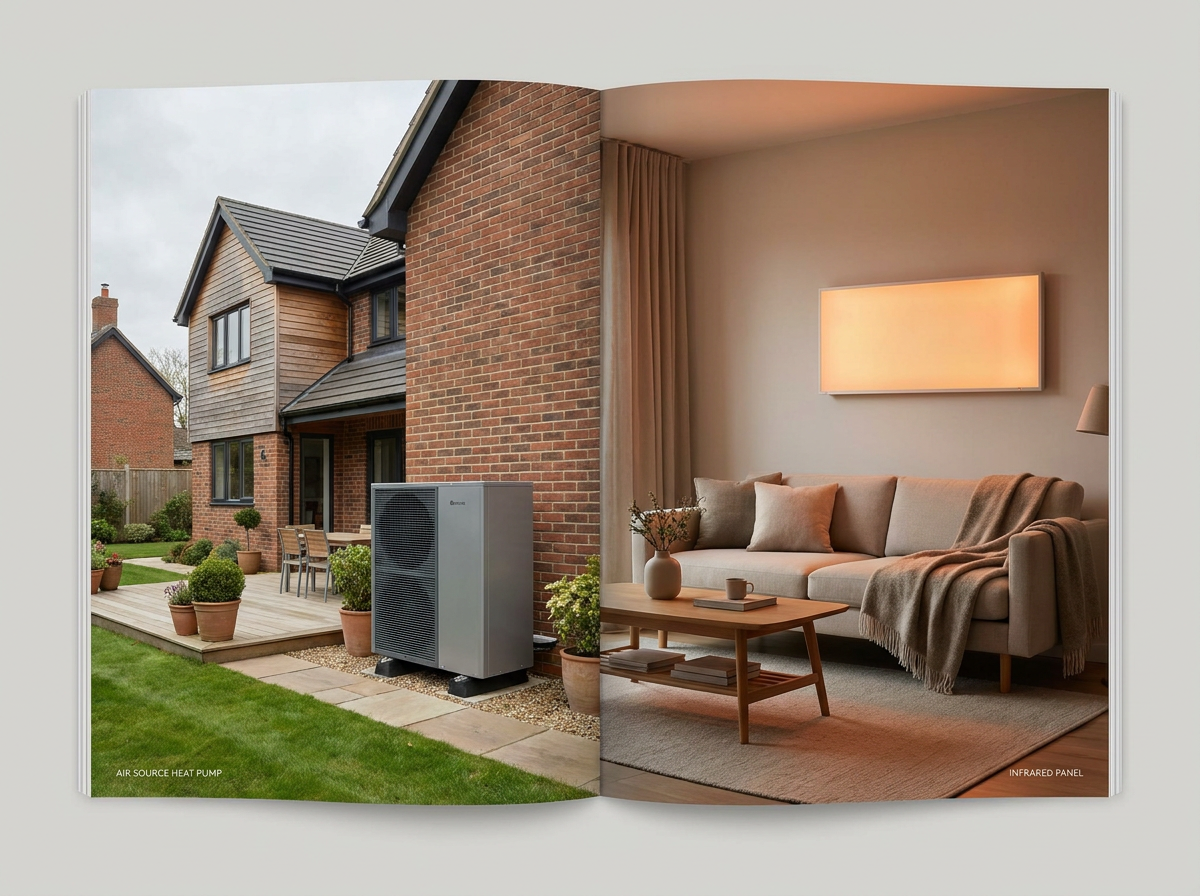
Heat pumps are having a long moment in the UK — and for many homes they are the right backbone system. They are not the right answer to every heating problem.
This post is the candid version of a conversation we have increasingly often: when we recommend infrared heating instead of a heat pump (or before one, or beside one). It is written for homeowners who want comfort and sanity, not a tribal argument between technologies.
We supply designer radiators for wet systems and a growing electric heating range that includes infrared panel options. That means we can recommend either path without pretending the other does not exist.
| Air-to-water heat pump | Infrared panel heating | |
|---|---|---|
| Best at | Whole-home low-carbon heat via water circuit | Room-level or zone comfort |
| Install scale | Major plant + emitters + often cylinder | Electrical install of panels |
| How warmth feels | Steady air and fabric temperatures via rads/UFH | More direct warmth to people and surfaces |
| Upfront disruption | Higher | Usually lower |
| Running cost logic | High efficiency if designed well | Pay for the electricity you use in the rooms you heat |
| Weak spot | Bad design / wrong radiators | Using tiny panels to heat huge leaky volumes all day |
Neither column is “winners only.” They solve different problems.

Infrared panels emit radiant energy that warms solid objects and people in line of sight more directly than a pure convection heater that mainly warms air. The room air still participates — this is not space-station science — but the comfort feel is often described as similar to gentle sunlight.
That matters because:
It does not mean infrared violates physics or heats your home for free. Poorly specified electric heating of any kind can be expensive. Specification and habits matter.
For broader electric context, see our electric heating systems UK guide.
Classic examples:
A whole-home heat pump project to fix one annoying room is using a sledgehammer. An infrared panel (or a small set of panels) aimed at occupancy patterns can be proportionate.
Browse current options in electric heating and ask us to help match wattage to room use via contact.
Boilers fail on Friday nights. Grants, installers, and emitter upgrades take planning. Infrared can bridge:
Think of IR as a strategic stepping stone, not a forever vow — unless it turns out to be all you needed.
Not every property is ready for an outdoor unit and a full hydraulic redesign right now:
Indoor electric infrared avoids external plant. It still needs safe electrical capacity and proper mounting — we are not suggesting DIY chaos — but the constraint set is different.

Heat pumps shine when the house runs as a steady comfort system. If your lifestyle is “heat the room I am in,” infrared’s room-level control is psychologically and economically easier to understand: off is off.
We still encourage sensible whole-home thinking for damp control and fabric health — do not ice half the house into mould territory — but targeted comfort is legitimate.
Sometimes the customer arrives saying “maybe I need a heat pump” when the real issue is undersized or unbalanced radiators on a serviceable boiler. In those cases we may recommend:
That is not anti heat pump. It is anti misdiagnosis. Read Why Bigger Radiators Matter More Than Most People Realise and most efficient radiators.

Honesty retains customers.
We are cautious about all-IR whole-home strategies when:
In those cases, a designed heat pump with proper emitters — see Energy Saving Trust guidance — is usually the grown-up answer. Infrared may still play a support role.
Some of the best homes we see are not purist:
Hybrids need clear control logic so systems do not fight. We help plan that when we supply both sides of the equipment mix.
Heat pump path costs: plant, labour, possible radiator swaps, cylinder/controls, electrical work, then running costs shaped by efficiency and tariffs. Grants like the Boiler Upgrade Scheme can reduce upfront cost for eligible homes — verify live GOV.UK rules.
Infrared path costs: panel purchase, electrical install, decorative making-good, then running costs tied to watts × hours × unit rate.
Infrared often wins on entry cost per room. Heat pumps often win on whole-home efficiency when the building cooperates. Compare the project you are actually doing, not a slogan.
Early electric heaters looked temporary. Modern infrared panels can sit on the wall as a minimal rectangle — closer to a design object than a last-minute plug-in. That fits homes where people chose Bradley’s because they care how heating looks.
We pair that aesthetic bar with our wet-world designers: vertical radiators, Caldaro aluminium, oval verticals — so whether you go radiant electric or hydronic, the finish can still feel premium.

If you want hands-off fitting for wet emitters alongside electric plans, our install team is built for accountable delivery.
From that we recommend heat pump pathway, infrared pathway, radiator-only pathway, or a hybrid. No script forces a single SKU.
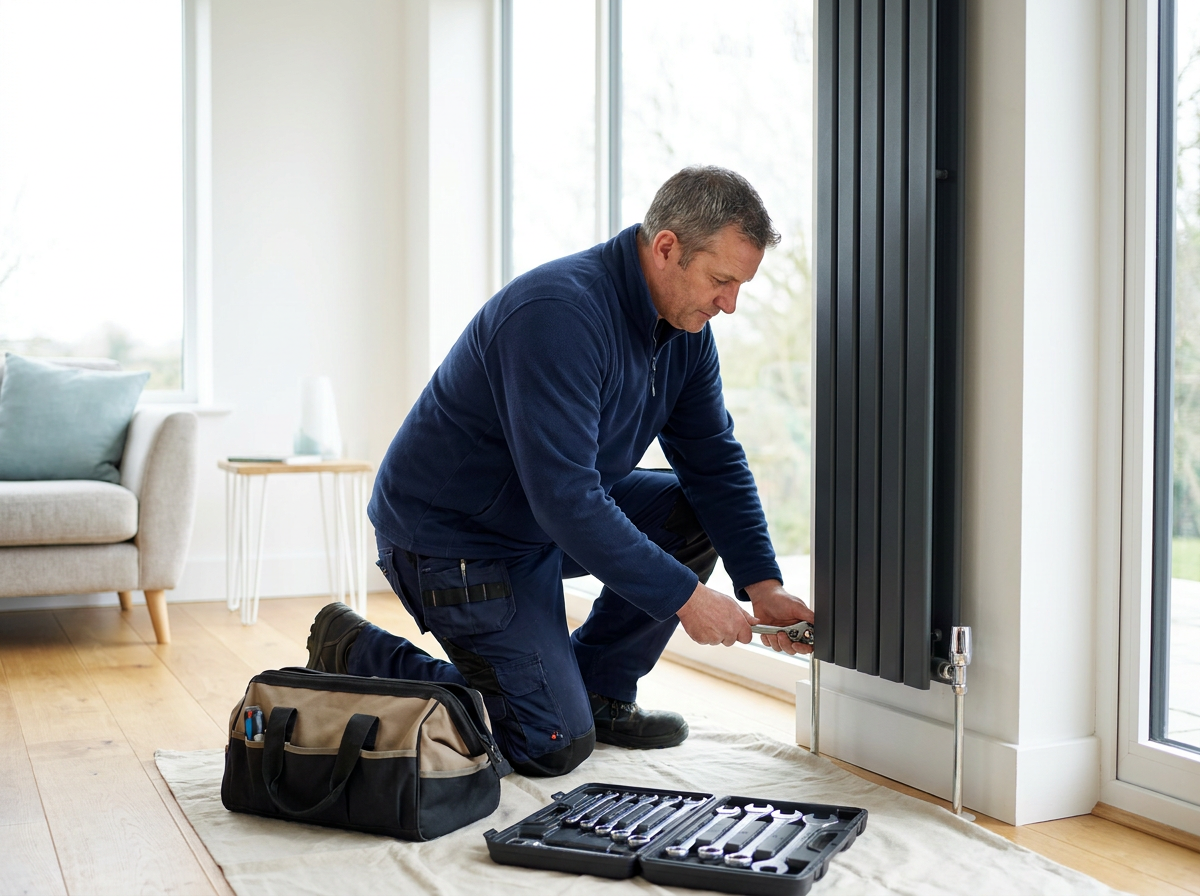
A useful homeowner sequence:
We help at steps 1–5 commercially through product selection in electric heating; your electrician owns the safety-critical electrical design. Where wet radiators are part of the same refresh, our installers can coordinate the hydronic side.
“Infrared causes harmful radiation.” In mainstream far-infrared heating panels sold for homes, you are not buying a medical or industrial laser. Follow normal electrical and mounting safety. Be wary of extreme health claims in either direction.
“Infrared replaces insulation.” No heater does. Fabric improvements reduce how hard any system works.
“One tiny panel heats open-plan vaulted spaces easily.” Match kit to volume and heat loss. Open-plan drama ceilings need honest design, whether IR or wet.
“Electric always bankrupts you.” Uncontrolled electric heating of a sieve-like building can. Targeted IR with disciplined use is a different behaviour pattern. Compare your pattern, not a stereotype.
Upfront per room, often yes. Whole-home over years depends on tariffs, insulation, and use. Compare scenarios, not headlines.
It can form a whole-house strategy in some properties with careful design. Many UK homes are better served by IR as zones or by a heat pump backbone.
Yes — different systems can coexist. Wet radiators on a boiler or heat pump plus IR in selected rooms is common sense when planned.
Yes. Contact Bradley’s with room dimensions, glazing notes, and how you use each space. Start browsing at electric heating.
Choose IR now without painting yourself into a corner. Keep notes on electrical routes and still plan future emitter upgrades using our aluminium and column ranges.
We recommend infrared heating instead of a heat pump when the problem is room-scale, time-sensitive, constraint-heavy, or behavioural — and when a full hydraulic heat pump project would be disproportionate. We recommend a heat pump when the whole home is ready for an efficient low-temperature water system and you want one coherent backbone.
If you are stuck between those poles, you are normal. Send us the floor plan reality — not the internet argument — via contact. We will map products from electric heating and our radiator collections, and we can install where you need a done-for-you finish.
Related: What We Tell Customers Asking About Heat Pumps · Can You Keep Your Existing Radiators With a Heat Pump? · Can a Victorian House Really Run Efficiently on a Heat Pump?