August 2026
Really happy with their products
They look modern and feel good quality. The price was competitive and delivery was prompt. Very pleased and will buy again.
AhmedPrompt delivery, competitive priceRead on Trustpilot


Heat pumps attract strong opinions. Some are fair. Plenty are recycled myths that stop good projects — or worse, excuse bad ones.
Every week in conversation with UK homeowners we hear the same five claims. Here is how we answer them, what the evidence roughly supports, and what it means for your radiators, your budget, and whether infrared or electric heating should be part of the plan instead.
For a wider myth-busting backdrop, the Energy Saving Trust heat pump fact check is a useful independent read. Our job here is the practical, radiator-shop floor version.
The grain of truth: As outdoor air gets colder, an air source heat pump works harder. Output and efficiency are not identical at 10°C and at −5°C.
The myth version: “They only work in Scandinavia’s marketing brochures” or “they die below freezing.”
What we tell customers: Modern units are engineered for cold climates far harsher than a typical English or Welsh winter. The real UK failure mode is rarely “it was 2°C outside.” It is undersized emitters, poor weather compensation setup, or a house with huge uncontrolled heat loss.
If someone says their heat pump “does not work in the cold,” we ask:
Cold weather exposes weak design. It does not automatically invalidate the technology. Official explainers from the Energy Saving Trust align with that nuanced view.

The grain of truth: Some radiators are already large enough. Keeping them saves money and mess.
The myth version: “Heat pumps work with any existing radiators — never change a thing.”
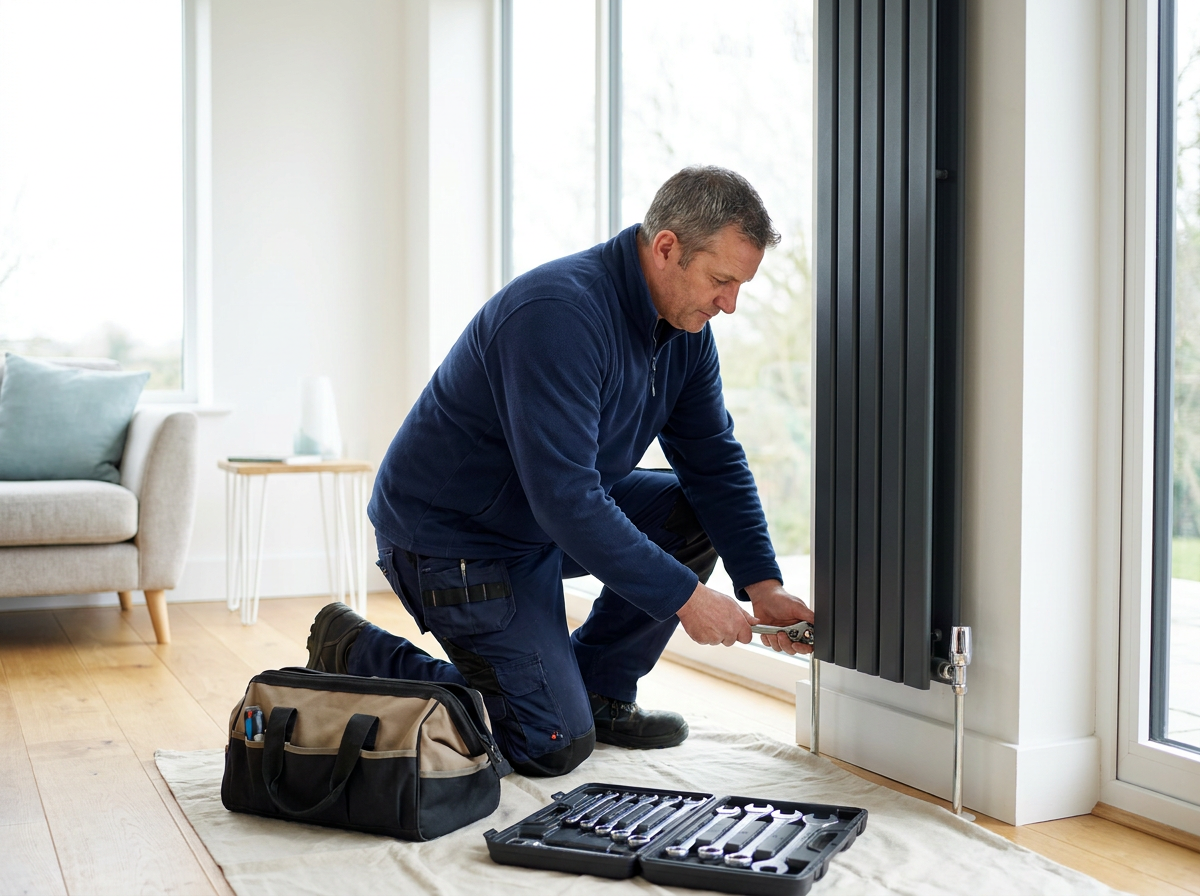
What we tell customers: Water will circulate through old radiators. Heat delivery is the issue. Lower average water temperatures mean you often need more surface area or higher-performance emitters. We covered the full decision tree in our guide on keeping existing radiators with a heat pump.
Practical upgrades we specify constantly:

If your quote skips emitter checks, you are not buying a myth — you are buying a risk.
The grain of truth: A well-designed heat pump can deliver multiple units of heat per unit of electricity, which can beat gas on cost and carbon depending on tariffs and prices.
The myth version: “Bills always plummet the day it is commissioned.”
What we tell customers: Running cost is a formula, not a slogan. It depends on:
Force a heat pump to run very hot because radiators are tiny, and you crush the efficiency advantage. That is why we obsess over emitters and point people to efficient radiator choices and proper BTU thinking.
Grants such as the Boiler Upgrade Scheme improve the investment case on upfront cost — separate from day-to-day running cost. Check current rules on GOV.UK rather than relying on last year’s social media thread.
The grain of truth: Outdoor units make sound. A bad location next to a neighbour’s bedroom window is antisocial.
The myth version: “They sound like a helicopter on the patio.”
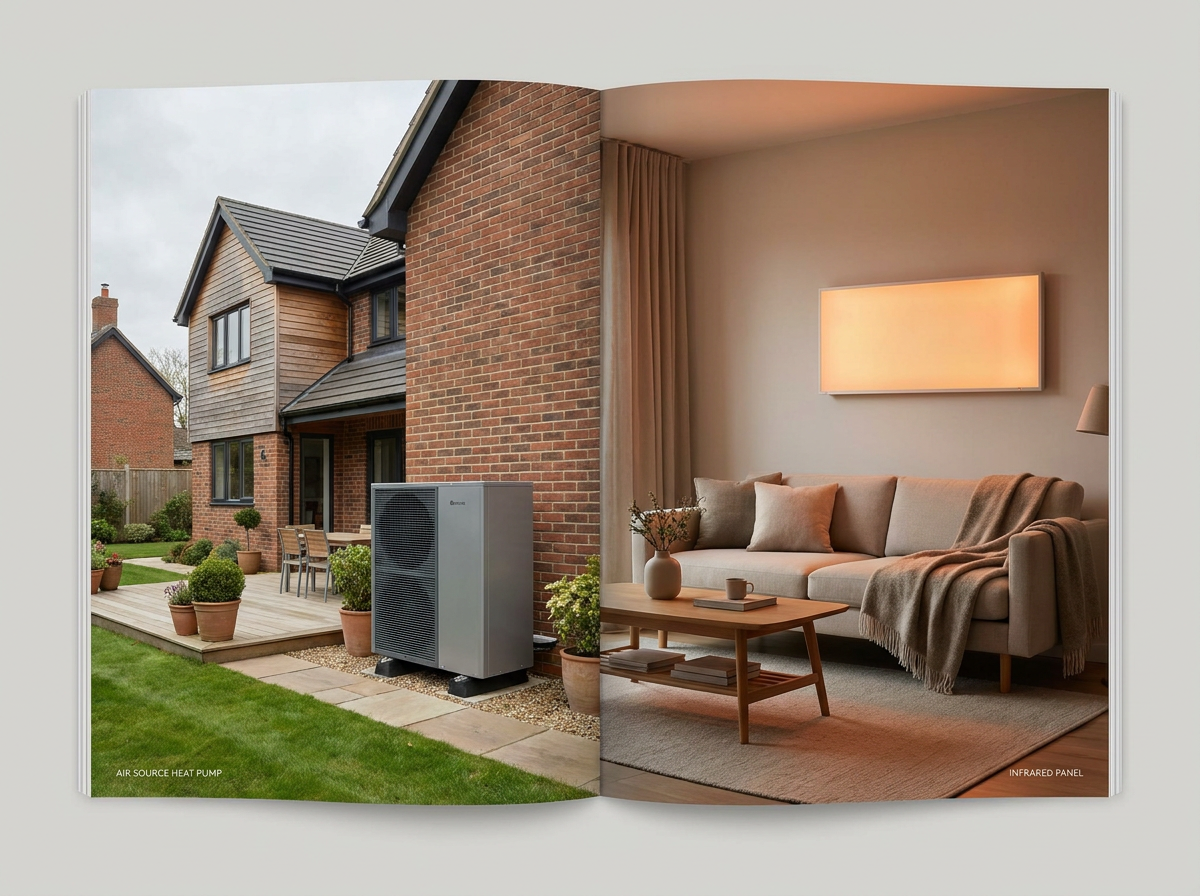
What we tell customers: Quality units, correctly sited, with manufacturer clearances respected, are background plant noise — not industrial chaos. Planning constraints and neighbourly placement matter. If a quote puts the unit in the worst possible corner to save two metres of pipe, challenge it.
Indoor noise is usually minimal compared with older boilers clunking away, though pipe expansion ticks can annoy in quiet houses if pipework is poorly clipped. That is installation craft, not destiny.
The grain of truth: A full air-to-water heat pump is a significant project. Not every household should force it this year.
The myth version: “There is no middle path.”
What we tell customers: There is almost always a middle path.
Infrared deserves a special mention because customers lump all electric heat into “expensive fan heaters.” A properly specified infrared panel warms people and surfaces differently from a cheap convection blast. Explore the growing range under electric heating, and read our dedicated post on when we recommend infrared instead of a heat pump.

“Radiators will be freezing cold.” They often run warmer than room air but cooler than old boiler scorch-levels. Correctly sized, they still heat the room. Ice-cold metal plus cold room equals design or fault.
“You must have underfloor heating.” UFH is lovely with heat pumps. It is not mandatory. High-output radiators work across thousands of UK installs.
“TRVs make heat pumps impossible.” Poorly understood controls cause issues; thoughtful control strategies exist. Do not bin the idea of room control — specify it properly. Products like the Ethiant chrome TRV still have a place in many systems.
“Any cheap outdoor unit plus hope will do.” Design quality beats badge snobbery and bottom-barrel pricing. Look for competent design discipline; MCS frameworks exist to raise standards.
Myths create two opposite disasters:
Our aim is the boring middle: clear expectations, right emitters, honest timelines. That is also why we publish guides like heating solutions for homes and electric heating systems UK — so you can compare paths without drama.
Many heat pump projects stall at the Sunday lunch table, not at the technical survey. If you are the researcher in the family, try this script:
Calm specificity beats both hype and cynicism.
Ask for:
If a salesperson cannot produce most of that, you are shopping for hope. Pair their paperwork with independent reading from the Energy Saving Trust and current grant rules.

Many are. Some complaints are real but misdiagnosed — often emitters, controls, or expectations rather than “heat pumps cannot work in the UK.”
That existing radiators never need checking. It causes comfort failures and unfair technology blame.
We sell radiators and electric heating. We recommend heat pumps when they fit, and alternatives when they do not. Trust lasts longer than a single SKU.
Start with the Energy Saving Trust heat pump guide and fact check, plus current Boiler Upgrade Scheme pages on GOV.UK.
Often yes — via emitter upgrades, balancing, and complementary room heating. Get in touch with symptoms and any design paperwork you have.
The five myths we hear about heat pumps every week all contain a splinter of truth wrapped in absolute language. Cold weather, radiators, running costs, noise, and “no alternatives” deserve precise answers — not slogans.
If you want those answers applied to your rooms and walls, Bradley’s Radiators can help you choose high-output designer radiators, plan electric or infrared where it helps, and install with clear accountability. Myths make good social media. Warm homes need better than that.
Related: What We Tell Customers Asking About Heat Pumps · Can You Keep Your Existing Radiators With a Heat Pump? · Why Bigger Radiators Matter More Than Most People Realise