
Can You Keep Your Existing Radiators With a Heat Pump?
Switching to a heat pump is one of the biggest heating decisions a UK homeowner can make. Alongside running costs and grants, one question comes up again and again: can you keep existing radiators with a heat pump?
The short answer is yes — often you can. Heat pumps can work with many existing radiator systems. The longer answer is more useful: whether your radiators are suitable depends on flow temperature, radiator size and output, home insulation, and how the system is designed as a whole.
This guide explains how heat pumps and radiators work together, when you can keep what you have, when upgrades make sense, and how to choose heat-pump-ready emitters if you do need to change some rooms. Where replacements are needed, we point to ideal options from our ranges — especially aluminium radiators and column radiators.
Quick answer: yes, with the right system design
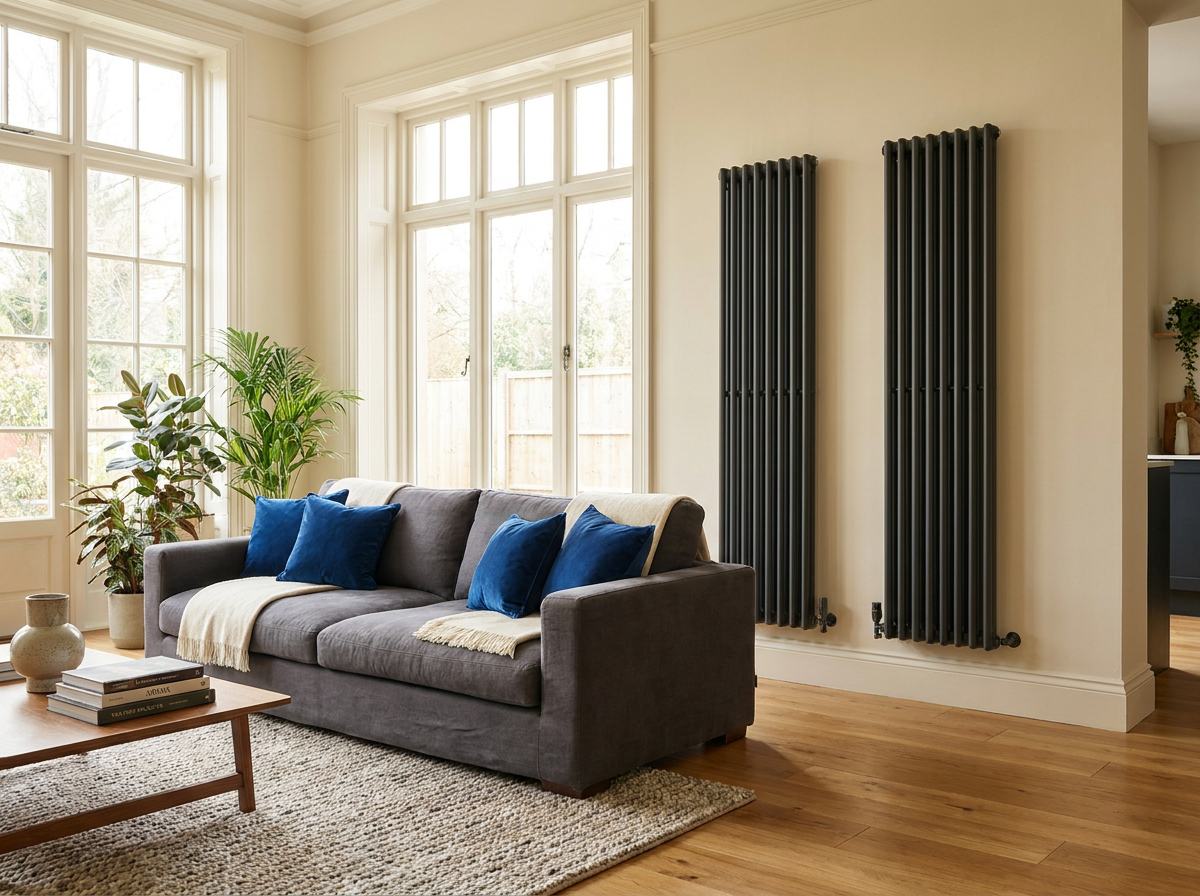
Heat pumps do not require underfloor heating by default. Both air source and ground source heat pumps can heat homes through radiators.
What changes is the way heat is delivered:
- Traditional gas boilers often run radiators at higher water temperatures (commonly around 60–75°C flow).
- Heat pumps are most efficient at lower flow temperatures, typically around 35–55°C.
At a lower flow temperature, each radiator emits less heat than it did on a hot boiler circuit. That does not automatically mean every radiator must be replaced. It does mean the system must be checked room by room.
In many homes the outcome is mixed:
- Some radiators already have enough surface area and can stay.
- A few underperforming rooms need larger or higher-output radiators — often aluminium or column models
- Pipework, controls, and insulation improvements can reduce how many radiators need changing
So the practical question is not only “can you keep existing radiators with a heat pump?” — it is “which radiators still deliver enough heat at the planned flow temperature?”
Why heat pumps prefer lower radiator temperatures
A heat pump moves heat from outside air (or the ground) into your heating circuit. The harder it has to work to raise water temperature, the more electricity it uses and the lower its efficiency (often discussed as SCOP or COP).
Lower flow temperatures usually mean:
- Better running efficiency
- Lower running costs over the year
- Quieter, steadier operation
- More comfortable, less “on/off” heating feel
That is why modern heat pump design aims for the lowest practical flow temperature that still keeps every room warm on a design-day winter load.
Radiators still work at these temperatures. They simply need enough emitting surface — or a design that transfers heat effectively — to match the room’s heat loss.
For independent background on air source heat pumps in UK homes, see the Energy Saving Trust guide to air source heat pumps.
Do heat pumps work with existing radiators?
Yes. Leading manufacturers and heating bodies are clear on this point: existing radiators can work effectively with heat pumps when they are properly sized and the home is reasonably insulated.
What “properly sized” means in practice:
- Room heat loss is calculated (not guessed from the old boiler setup).
- Radiator output is checked at the intended mean water temperature, not only at the old boiler rating.
- The weakest rooms are identified — often large living rooms, north-facing spaces, loft conversions, or rooms with big glazing.
- Only the radiators that fall short are upgraded, unless a full redesign is preferred for comfort or aesthetics.
If your current radiators were already oversized for a gas boiler, you may be in a strong position. Many UK homes had radiators selected with spare capacity. That spare capacity becomes useful when flow temperatures drop.
If radiators were marginal even on gas — slow to warm, cold spots, constant high boiler settings — a heat pump will expose that quickly unless emitters are improved.
Flow temperature, Delta T, and why old BTU labels can mislead
Radiator packaging and older brochures often quote output at a high temperature difference (historically ΔT50 or similar boiler-era conditions). Heat pump systems are frequently designed around lower mean water temperatures, so the same radiator produces less output than the headline figure suggests.
What matters for a heat pump survey:
- Design outside temperature for your region
- Target indoor temperatures by room
- Fabric heat loss (walls, floors, roof, windows, airtightness)
- Planned flow and return temperatures
- Radiator type, size, connections, and free air movement around the unit
A radiator that “was fine” at 70°C flow may be undersized at 45°C flow. Another radiator in a smaller, better-insulated room may still be perfect.
This is why a proper heat loss and emitter assessment beats generic advice from a product page.
If you want a homeowner-friendly starting point for room sizing language and output thinking, use our guide on how to calculate BTU for a room. Treat it as orientation, then confirm figures against heat-pump design temperatures with your installer or survey.
When you can usually keep your existing radiators
You are more likely to keep most existing radiators with a heat pump if several of the following are true:
1. The home is well insulated
Cavity wall insulation, decent loft insulation, upgraded glazing, and reduced draughts lower the heat each room needs. Lower demand means existing radiators can often cope at reduced flow temperatures.
2. Radiators already feel generous on the current system
If rooms warm quickly and you rarely need the boiler at maximum, emitters may already have spare capacity.
3. You have larger panel, column, aluminium, or designer radiators with good surface area
More surface area generally helps at lower temperatures. Multi-column radiators and larger double/triple panels often outperform small single panels in heat-pump scenarios. Aluminium radiators and column radiators are especially well suited when you do need upgrades — aluminium for fast response and strong conductivity, column for high surface area in a classic or modern format.
4. Pipework can support the design flow rates
Heat pump systems need correct circulation. Undersized or poorly balanced circuits can make good radiators perform badly.
5. Controls are upgraded as part of the project
Weather compensation, correct room controls, and sensible scheduling help the system run low and steady rather than fighting the building.
In short: keeping radiators is common. Replacing every radiator in the house is not automatic.
When radiator upgrades are the smarter move
Even if the answer to “can you keep existing radiators with a heat pump?” is partly yes, selective upgrades are often the difference between an efficient system and a disappointing one.
Consider changing radiators in rooms where:
- Heat loss is high and the current radiator is small
- The radiator is single-panel and already struggles in winter
- Furniture, curtains, or covers block convection and radiation
- You want a lower system flow temperature for better efficiency
- You are renovating and can improve comfort and style at the same time
- Noise, cold corners, or long heat-up times are already a complaint
Upgrading a few critical emitters can allow the whole heat pump to run cooler and more efficiently. That can be better value than forcing a high flow temperature just to keep every old radiator. For those rooms, start with proven low-temperature-friendly formats such as the Resia Horizontal Aluminium Radiator, Aron Aluminium Radiator, Traditional 6 Column Horizontal, or a vertical option like the Colona Vertical 3 Column.
Manufacturer guidance is consistent on the principle: radiators that can run effectively at lower flow temperatures are the ones that suit heat pumps best. See, for example, Viessmann’s advice on whether you need special radiators with a heat pump.
What makes a radiator “heat pump ready”?
There is no single magic product label that guarantees success. “Heat pump compatible” usually means the radiator can deliver the required room output at the design low temperature.
Look for these practical traits:
Higher output at lower mean water temperatures
Compare outputs at the temperatures your designer will actually use, not only old boiler-era figures.
Greater surface area for the wall space available
Column radiators, larger doubles/triples, vertical designer models, and aluminium designs can help where wall width is limited but height is available.
Good water volume and distribution inside the radiator
Stable, even surface temperature matters for comfort at lower flow temps.
Clearances and installation quality
A correctly sized radiator installed too close to furniture or boxed in will underperform on any heat source — and more obviously on a heat pump.
Style that you are happy to live with
Because heat-pump radiators often need more presence in a room, design quality matters. A larger radiator should still look intentional.
If you are planning selective upgrades rather than a full strip-out, start with the two formats that usually perform best on low-temperature systems: column radiators and aluminium radiators. Add designer radiators where style and wall layout need a feature piece.
Best radiator upgrades for heat pumps: aluminium and column
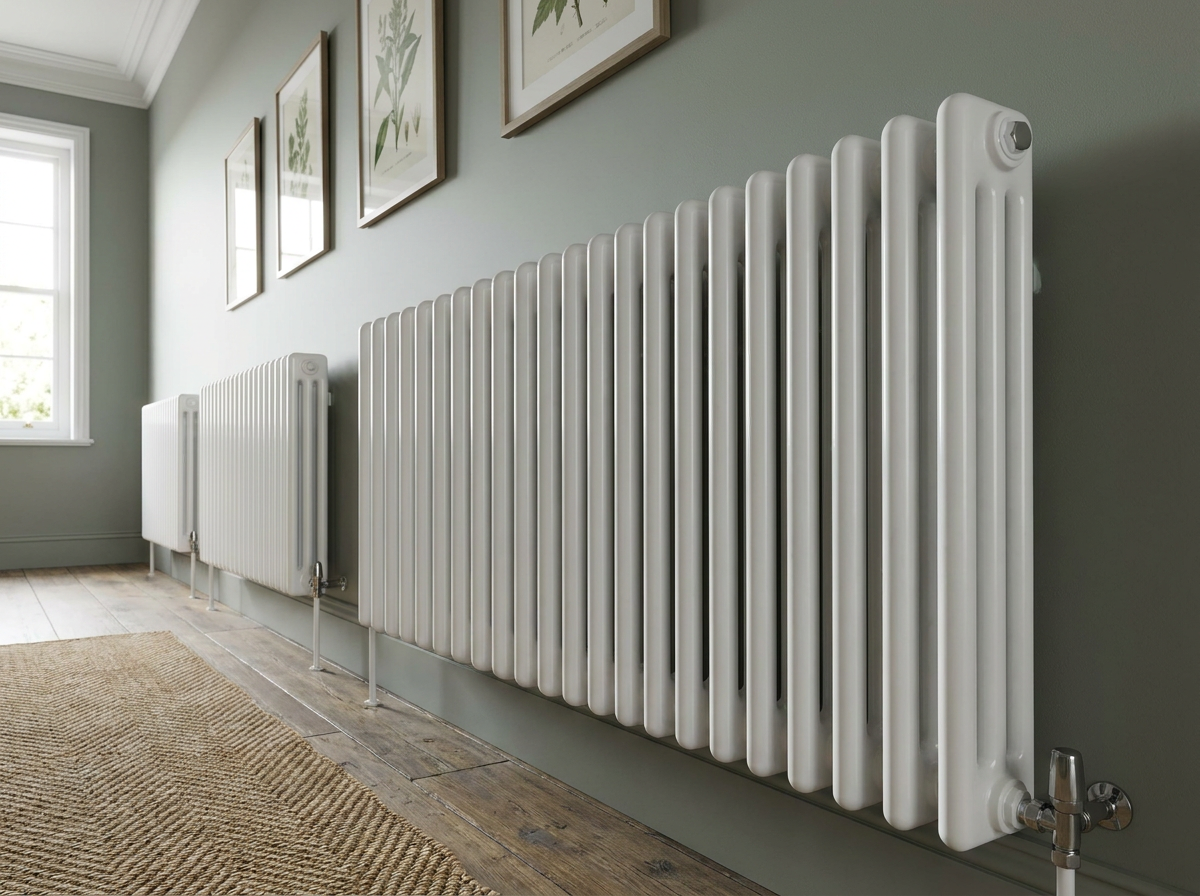
When existing emitters fall short, you do not need a random like-for-like swap. For most UK heat pump projects, aluminium radiators and column radiators are the ideal upgrade path.
Why aluminium radiators suit heat pumps
Aluminium conducts heat quickly, so the radiator responds fast when the heat pump modulates. That helps comfort in rooms you heat on a schedule and supports efficient low-temperature operation when the unit is correctly sized.
Shop the full aluminium radiators collection, including:
- Resia Horizontal Aluminium Radiator — strong horizontal output for living rooms and bedrooms where wall width is available
- Aron Aluminium Radiator — aluminium build with a ceramic core that helps retain warmth
- Picoli Aluminium Radiator Vertical — slim vertical aluminium option for tighter walls
- Melvin Aluminium Radiator Vertical — tall vertical aluminium format for hallways and modern spaces
Why column radiators suit heat pumps
Column radiators pack a large emitting surface into an elegant footprint. Extra columns and deeper formats increase output potential at lower flow temperatures — exactly what heat pump design needs — without looking like a commercial panel.
Browse all column radiators, including:
- Traditional 6 Column Horizontal Radiators (600 height) — high surface area for rooms that need serious low-temperature output
- Traditional 3 Column Horizontal Radiators (400 height) — classic multi-column performance under windows and along longer walls
- Traditional 2 Column Vertical Radiators (1800 height) — tall column heat where floor-to-ceiling wall space is the opportunity
- Colona Vertical Mild Steel Radiator 3 Column — vertical 3-column styling with strong output for halls, kitchens, and feature walls
- More Colona options in the Colona vertical column range
Rule of thumb: keep existing radiators where output already meets the design temperature; where it does not, prioritise aluminium or column upgrades before forcing the heat pump to run hotter.
Radiator types compared for heat pump systems
Type 11 / compact single panels
Often the first to need replacement in colder or larger rooms. They can still work in small, well-insulated spaces.
Type 21 / Type 22 panel radiators
Common in UK homes. Many remain usable if sized generously. Underperforming rooms may need a move up in size or type — or a switch to column or aluminium.
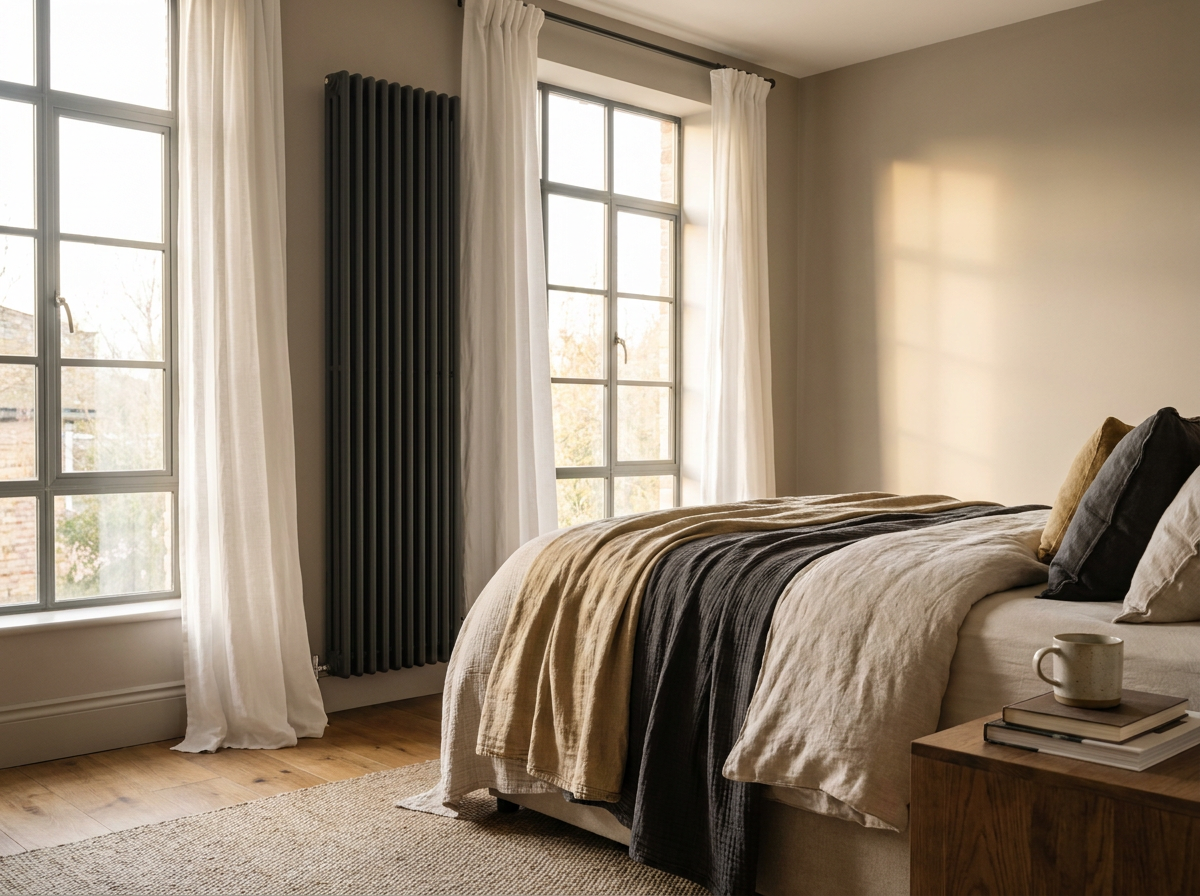
Column radiators (ideal upgrade)
Popular for both traditional and modern interiors. Multi-column models offer strong output potential and a premium look, which helps when you need more emitter without a utilitarian appearance. Explore column radiators when a room needs more surface area at heat-pump flow temperatures.
Vertical designer radiators
Useful where wall width is tight — hallways, either side of glazing, kitchen runs, and modern living spaces. Height creates surface area when horizontal space is limited. See vertical designer radiators alongside vertical column and vertical aluminium models.
Aluminium radiators (ideal upgrade)
Often the best choice for responsive heat-up and efficient heat transfer. Suitability still comes down to output at the design temperature and correct room sizing — start with the aluminium radiators range.
Cast iron radiators
High thermal mass and strong period character. They can form part of a low-temperature system when output and system design are correctly engineered, but they should be assessed carefully rather than assumed.
No radiator type automatically “fails” with a heat pump. Sizing and system design decide performance. When you are buying new, aluminium and column radiators are the ideal shortlist for most heat-pump-ready upgrades.
Insulation first, emitters second
Before spending on a whole-house radiator replacement, prioritise the building fabric where practical:
- Loft insulation depth and continuity
- Cavity wall or solid wall measures where appropriate
- Draughtproofing around floors, doors, and service penetrations
- Window and door condition
- Suspended floor improvements where accessible
Every reduction in heat loss makes it easier to answer “yes” to keeping more of your existing radiators with a heat pump. It also improves comfort and lowers the required heat pump capacity.
A good installer sequences this properly: fabric and ventilation strategy, heat loss calculation, emitter check, then equipment selection.
Hybrid systems and phased upgrades
Not every home moves from gas to a fully optimised heat pump system overnight. Some households use:
- A heat pump with selected radiator upgrades now
- Further emitter improvements during later renovations
- Hybrid approaches in specific constrained properties
Phasing can be sensible if budget, disruption, or listed-building constraints apply. The key is honest design temperatures and clear expectations. A system designed around temporary high flow temperatures may cost more to run until emitters catch up.
If you are renovating room by room, plan radiator choices so each upgraded space supports the long-term low-temperature target.
Controls, balancing, and installation details that decide comfort
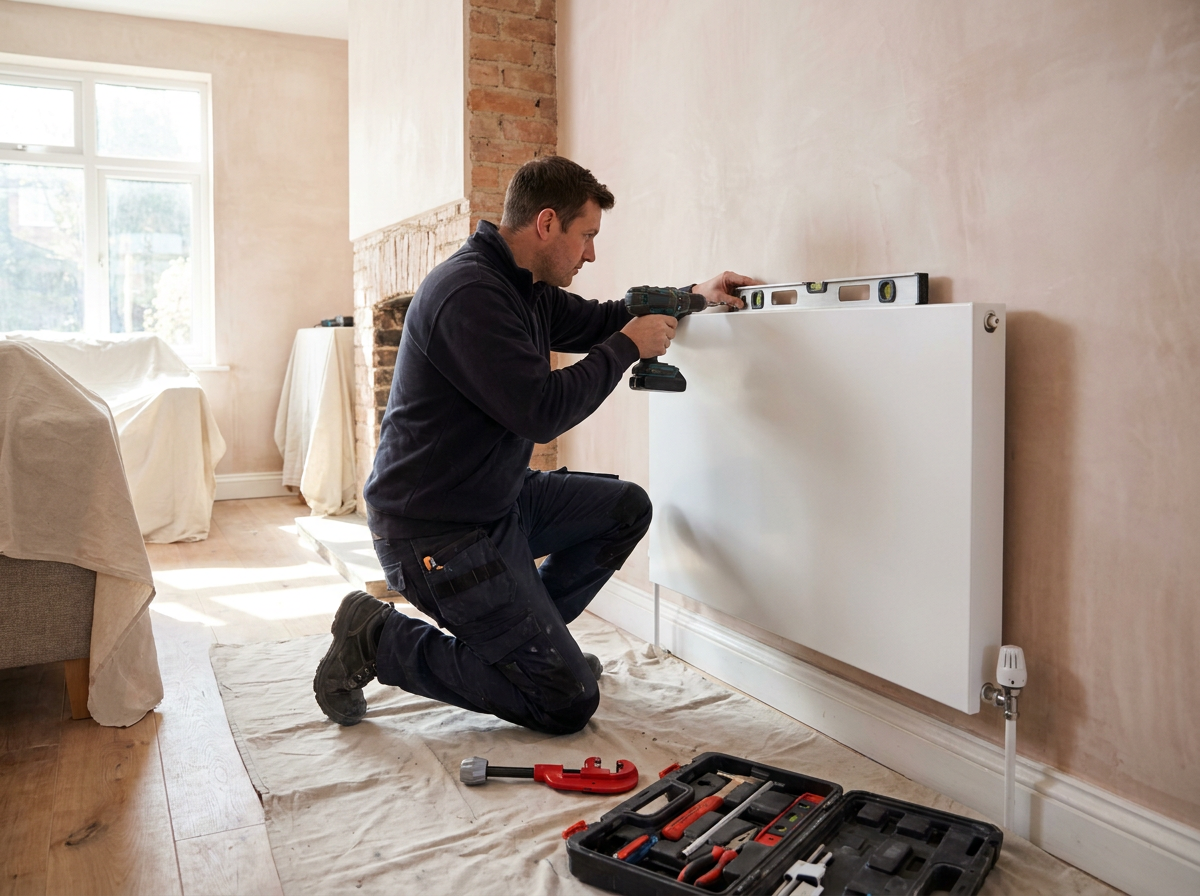
Radiators are only one part of the picture. Homes that keep existing radiators successfully with a heat pump usually also get the basics right:
System balancing
Lockshields and circuit balancing ensure each radiator gets the flow it needs. An unbalanced system creates hot and cold rooms regardless of heat source.
Correct pump duty and pipe design
Low-temperature systems often move more water to deliver the same heat. Pipework and circulating arrangements must match the design.
Weather compensation
Outdoor sensors and proper curves help the heat pump run at the lowest temperature needed for the day’s weather.
Room-by-room control strategy
Poorly planned TRV and thermostat combinations can short-cycle systems or starve rooms. Controls should be designed with the heat pump, not copied blindly from the old boiler setup.
Sound installation practice
Level mounting, proper supports, correct valve orientation, and clear airflow around the radiator protect both output and finish. If you need professional fitting support, see our radiator installation service.
A practical room-by-room decision framework
Use this simple framework with your surveyor or installer:
- List every heated room and current radiator size/type.
- Note comfort problems today (slow warm-up, cold spots, noisy valves, blocked radiators).
- Confirm insulation status for that part of the house.
- Calculate room heat loss for heat-pump design conditions.
- Compare existing radiator output at the proposed flow temperature.
- Mark each radiator: keep / maybe keep with minor change / replace.
- Model the whole-house flow temperature after those decisions.
- Choose replacements only where they unlock better efficiency or fix a real comfort gap — prioritise aluminium and column products from the Bradley's range when you do replace.
This avoids two expensive mistakes:
- Replacing everything by default
- Keeping everything by default and then running the heat pump too hot
Costs: keeping vs upgrading radiators
Exact costs vary by property, but the decision logic is consistent.
Keeping suitable radiators reduces disruption, product cost, and decoration work.
Replacing selected radiators — for example with aluminium or multi-column models — can:
- Enable a lower design flow temperature
- Improve efficiency and comfort
- Reduce long-term running cost
- Solve rooms that never heated well on gas either
Think in whole-life terms. A cheaper install that forces high flow temperatures can cost more over years of electricity use. A targeted emitter upgrade that lets the heat pump cruise efficiently often pays back through comfort and performance.
Also budget for related items people forget:
- New thermostatic valves where needed
- Pipework alterations
- System cleanse and inhibitor
- Possible cylinder or hot-water design changes
- Decoration after larger radiator swaps
Common myths about heat pumps and radiators
Myth 1: “Heat pumps only work with underfloor heating”
False. Underfloor heating is excellent at low temperatures, but radiators are widely used and fully viable when sized correctly.
Myth 2: “You must replace every radiator”
False. Many homes keep a large share of existing radiators and only upgrade the weak rooms.
Myth 3: “Any big radiator is automatically fine”
Not quite. Output at the design temperature, location, and free air movement matter more than visual size alone.
Myth 4: “If radiators are warm, the room must be correctly heated”
Surface warmth is not the same as meeting heat loss on the coldest design day. Proper calculation still matters.
Myth 5: “Designer radiators are only for looks”
Poor examples exist in any category, but quality designer radiators and column radiators can combine strong output with better aesthetics — useful when low-temperature design needs more emitter presence in the room.
Choosing replacement radiators without spoiling the room
If upgrades are required, you do not have to accept bulky, purely utilitarian kit.
Priorities for a premium UK home:
- Correct output first (at the real heat-pump design temperature)
- Aluminium or column construction where you need a dependable low-temperature upgrade
- Proportions that suit the wall and furniture layout
- Finish that matches skirting, joinery, and hardware
- Vertical aluminium (e.g. Picoli, Melvin) or vertical column (e.g. 2 Column 1800, Colona 3 Column) for narrow walls
- Horizontal column formats for under-window and classic spaces (e.g. 6 Column 600, 3 Column 400)
Shop heat-pump-ready products
Practical shortlist from the Bradley's range — click through to the live product pages:
| Need | Start here |
|---|---|
| Fast-response aluminium, horizontal | Resia Horizontal Aluminium |
| Aluminium with heat-retaining core | Aron Aluminium |
| Slim vertical aluminium | Picoli Vertical Aluminium or Melvin Vertical Aluminium |
| High-output horizontal column | 6 Column Horizontal 600 or 3 Column Horizontal 400 |
| Tall column for narrow walls | 2 Column Vertical 1800 or Colona Vertical 3 Column |
| Browse full ideal categories | Aluminium radiators · Column radiators |
For living spaces where style is as important as output, also use our designer radiators for living room guide and then confirm heat-pump temperature outputs before you buy.
If efficiency and emitter performance are your main research track, pair this article with finding the most efficient radiators for your UK home.
What to ask your heat pump installer about radiators
Take these questions into the survey:
- What design flow temperature are you proposing, and why?
- Have you calculated heat loss room by room?
- Which existing radiators meet output at that temperature?
- Which rooms need larger emitters, and by how much?
- Can a small number of upgrades unlock a lower system temperature?
- How will you balance and commission the system?
- What happens to comfort if outdoor temperatures hit design conditions?
- Are any radiators restricted by covers, curtains, or poor placement?
- What warranty and aftercare apply to both the heat pump and emitter works?
- Can you provide the emitter schedule in writing before installation day?
Clear answers here protect you from vague promises and post-install disappointment.
Supply-only vs supply-and-fit for radiator upgrades
Some homeowners keep the heat pump contractor for the plantroom side and handle radiator supply separately. Others prefer one coordinated finish for the emitters.
A joined-up approach helps when:
- Multiple rooms need different radiator formats
- Valve finishes and pipe covers need to match
- You want minimal rework after first fix
- Installation quality has to protect flooring and decoration
Bradley's Radiators supplies a curated range nationwide — including aluminium radiators, column radiators, and designer radiators — and can support professional installation where cover allows via postcode check on our installations journey. Whether you need one vertical feature radiator or a multi-room upgrade package, the goal is the same: emitters that actually match the heat pump design, not generic boiler-era assumptions.
Step-by-step: preparing your home before the heat pump arrives
- Gather boiler paperwork and any previous heating quotes
- Photograph every radiator and note width, height, and type
- List comfort complaints by room
- Note insulation upgrades already completed
- Decide which rooms are being refurbished soon
- Book a proper heat loss / emitter assessment
- Agree target flow temperature and emitter schedule
- Order replacements early if lead times apply
- Plan decoration and flooring protection
- Commission and balance after install — do not skip this
Preparation is where many “keep or replace” decisions become obvious.
FAQ: can you keep existing radiators with a heat pump?
Can you keep existing radiators with a heat pump in an older UK home?
Often yes, especially if insulation has been improved and some radiators are already generous. Older homes vary widely, so room-by-room checks matter more than the age of the property alone.
Do I need special heat pump radiators?
You need radiators that meet the required output at the design low temperature. That may be your current radiators, larger versions of similar models, or higher-output aluminium, column, or designer options.
Will my radiators feel cooler with a heat pump?
They may run at a lower surface temperature than an old high-temperature boiler system. Rooms can still feel comfortable when the system is designed for steady heat and correct emitter sizing.
Can I mix old and new radiators on one heat pump?
Yes. Mixed emitter systems are common. The design must ensure every room meets its heat loss target at the shared operating temperatures.
Are vertical radiators good with heat pumps?
They can be, particularly where wall width is limited. Vertical column and aluminium models are popular upgrades. As always, verify output at the intended temperature and allow proper clearances.
Which radiators are best if I need to upgrade for a heat pump?
For most homes, aluminium radiators and column radiators are the ideal upgrade choices: aluminium for quick response and conductivity, column for high surface area and strong low-temperature potential. Popular starting points include the Resia Horizontal Aluminium, Aron Aluminium, Traditional 6 Column Horizontal, and Colona Vertical 3 Column. Size every model to the room heat loss at your design flow temperature.
Should I replace radiators before or after insulation work?
Where practical, improve fabric performance first or as part of the same project plan. Lower heat loss can reduce how many radiators need upgrading.
Can towel rails stay on a heat pump system?
Often yes, but bathroom heat loss and towel-rail output still need checking. Some bathrooms benefit from a larger heated towel rail, an additional emitter, or complementary heating strategy.
Conclusion: keep what works, upgrade what limits performance
So, can you keep existing radiators with a heat pump? In many UK homes, yes — fully or mostly. Heat pumps and radiators are compatible when the system is designed around real heat loss and realistic flow temperatures.
The smart approach is not all-or-nothing:
- Keep radiators that already deliver enough output at the planned low temperature
- Upgrade the rooms that would force the whole system to run hotter than it should
- Improve insulation and controls so every emitter works less hard
- Choose replacements that balance output, efficiency, and the look of your home — ideally from our aluminium and column ranges
Ready to choose products?
| Collection | Shop |
|---|---|
| Aluminium radiators (ideal) | Shop aluminium |
| Column radiators (ideal) | Shop column |
| Designer radiators | Shop designer |
| Vertical designer | Shop vertical designer |
| Colona vertical column | Shop Colona |
Featured products: Resia Horizontal Aluminium · Aron Aluminium · Picoli Vertical Aluminium · Melvin Vertical Aluminium · 6 Column Horizontal 600 · 3 Column Horizontal 400 · 2 Column Vertical 1800 · Colona Vertical 3 Column
If you are planning a heat pump project and need emitters that support lower-temperature performance, prioritise aluminium radiators and column radiators — the ideal upgrade pair for most UK homes — then add designer radiators where the room needs a feature piece. For supply and professional fitting, see installations.
Get the emitter schedule right, and your heat pump is far more likely to feel comfortable, efficient, and future-ready from day one.