
Type 33 Radiator Sizing and Efficiency Guide
When you're looking for a serious amount of heat, a Type 33 radiator is the most powerful panel radiator you can get. Its "triple-triple" design, featuring three panels and three sets of convector fins, is built for one thing: maximum warmth. This makes it the perfect solution for very large or notoriously cold rooms.
What Is a Type 33 Radiator
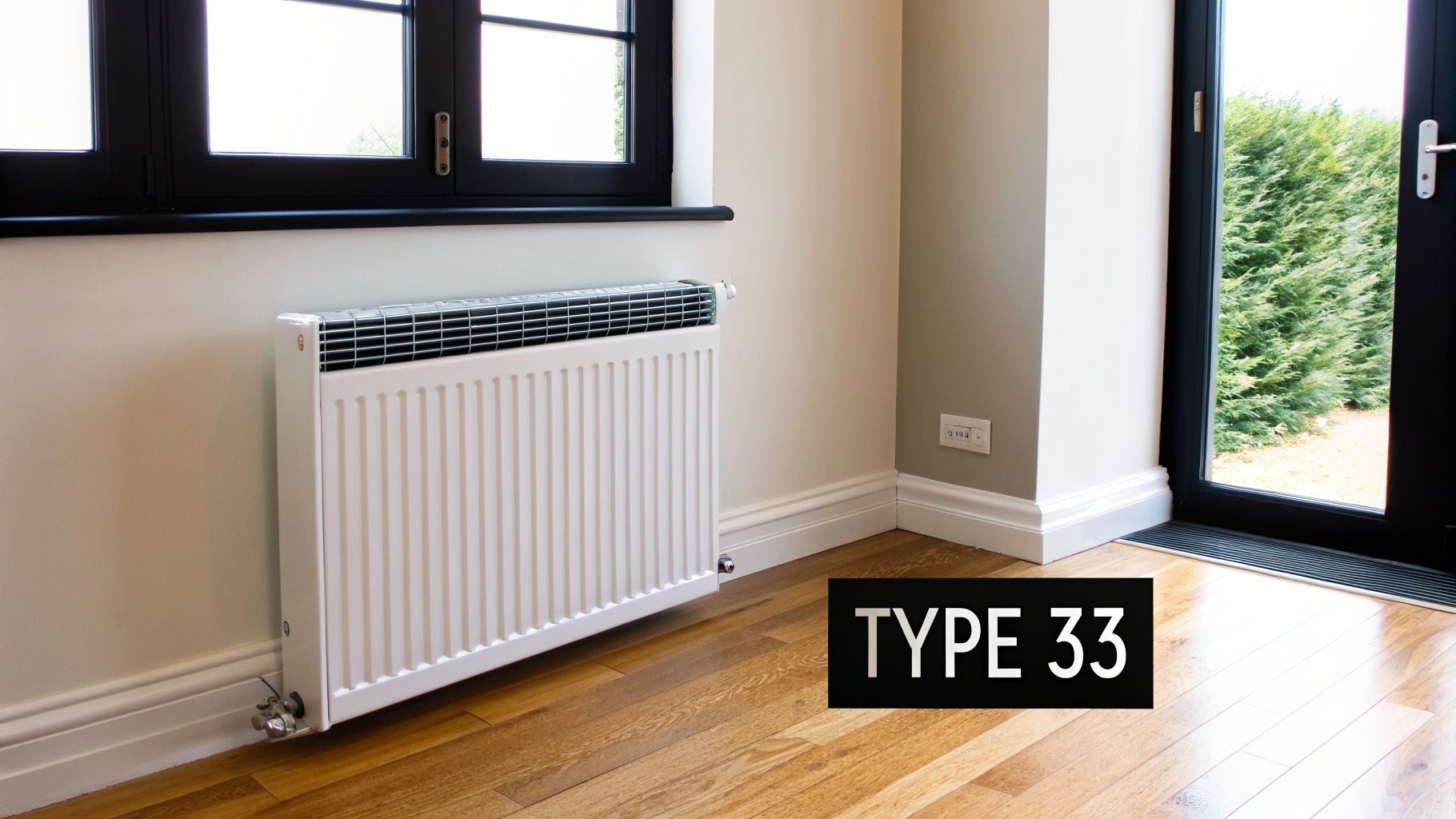
When you're shopping for radiators, you’ll come across names like 'Type 11', 'Type 22', and 'Type 33'. This might seem technical, but it’s actually a really simple code that tells you everything you need to know about the radiator's construction and power.
The first digit, ‘3’, tells you it has three heating panels. These are the flat, water-filled surfaces that radiate heat directly out into the room.
The second digit, also ‘3’, stands for three convector fins. These are the zig-zagging metal sheets nestled between the panels. As hot water runs through the radiator, these fins heat up and warm the surrounding air, which then rises and circulates around the room in a convection current.
The Power of Triple-Triple Construction
It’s this combination of three panels and three convector fins that gives a Type 33 its incredible heating power. All that surface area means a massive British Thermal Unit (BTU) output. More BTUs mean more heat, simple as that.
A Type 33 radiator is like the club sandwich of the heating world. A basic radiator is a single slice, but a Type 33 gives you three panels (the bread) layered with three sets of fins (the fillings) for a seriously substantial amount of warmth.
This powerful build makes it the undisputed champion for those really challenging spaces. If you've got a room that just won't stay warm, a Type 33 is often the answer.
Rooms that benefit most from this high-performance heating include:
- Large living rooms where a standard radiator just doesn't cut it.
- Big open-plan kitchen-diners with a huge volume of air to heat.
- Poorly insulated spaces like older conservatories or rooms with single glazing.
- North-facing rooms that get little to no sun and always feel chilly.
The trade-off for all this power is its depth. A Type 33 will stick out from the wall more than a slimmer model. But for any room that’s consistently cold, it’s a small price to pay for turning a frosty space into a cosy, comfortable retreat.
How a Type 33 Compares to Other Radiator Types
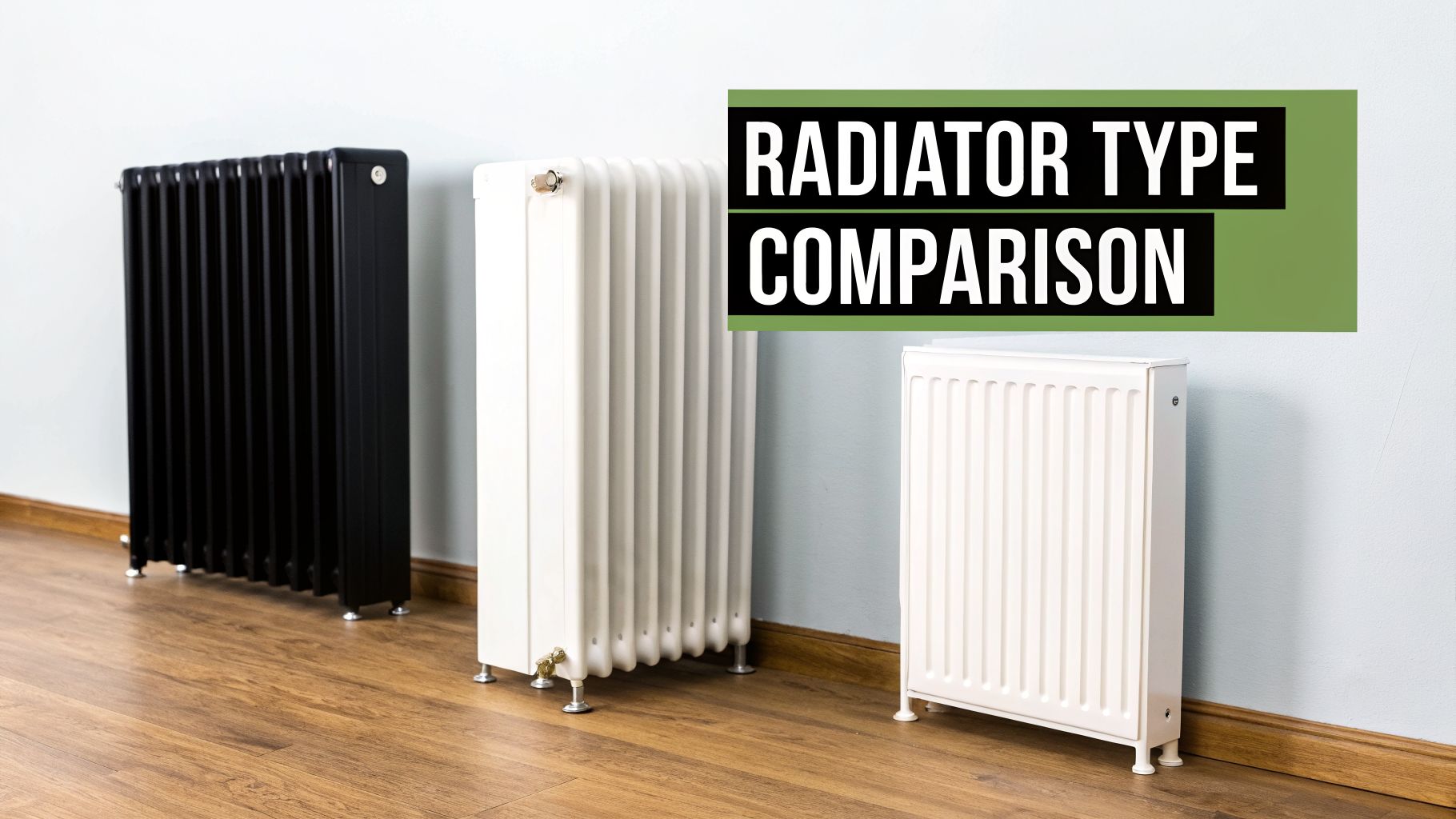
When you’re looking at new radiators, the technical names can seem a bit much. But once you know the secret, the numbering system for panel radiators is actually very simple. It’s all about how they’re built.
The first number tells you how many heating panels it has. The second tells you how many sets of convector fins are sandwiched between them. A Type 33 radiator, with its ‘triple-triple’ design, is the undisputed king of heat output. To really get a feel for its power, it helps to compare it to the other common types you’ll find.
The Slim and Simple Type 11
A Type 11 radiator is the slimmest you can get. It has just one panel and one set of fins, giving it a very shallow profile that sits close to the wall.
This ‘single-single’ design makes it a lifesaver in tight spots.
- Best for: Narrow hallways, small cloakrooms, or utility areas where every inch counts.
- The trade-off: Its heat output is quite low. It’s perfect for adding a touch of warmth but won’t be enough for a main living area or a chilly room.
Think of the Type 11 as a specialist. It’s brilliant where space is tight, but it just doesn't have the muscle for bigger jobs.
The Popular All-Rounder: Type 22
You’ll find Type 22 radiators in most homes across the UK, and for very good reason. With two panels and two sets of fins, it hits the sweet spot between powerful heat output and a manageable size.
This ‘double-double’ build gives you a serious jump in warmth compared to a Type 11, making it the go-to choice for bedrooms, dining rooms, and most average-sized lounges. It’s the reliable workhorse for everyday heating.
The Powerhouse: Type 33
And that brings us back to the Type 33 radiator. With three panels and three sets of fins, its one and only job is to pump out the maximum possible heat for its size.
It’s deeper and heavier than the others, but what you get in return is unmatched heating power. This makes it a real investment in comfort, especially for those hard-to-heat rooms that always feel cold.
Radiator Type Comparison at a Glance
This table breaks down the construction and typical use case for the most common radiator types, helping you choose the right one for your space.
| Radiator Type | Panels | Convector Fins | Profile (Depth) | Best For |
|---|---|---|---|---|
| Type 11 | 1 | 1 | Slim | Narrow hallways and small utility spaces |
| Type 22 | 2 | 2 | Moderate | Bedrooms, lounges, and most standard rooms |
| Type 33 | 3 | 3 | Deep | Large, open-plan, or cold rooms |
Ultimately, choosing the right type comes down to what you need for that specific room. A Type 11 is perfect for a corridor, and a Type 22 will comfortably heat a bedroom.
But when you absolutely have to turn a large, cold space into a warm, cosy area, the Type 33 is the only tool for the job.
Calculating the Right BTU for Your Room
Choosing a powerful radiator isn’t just about picking one that looks right. To make sure your new Type 33 radiator warms your room perfectly without wasting energy, you need to work out the room's specific BTU (British Thermal Unit) requirement.
Think of BTUs as the heating equivalent of calories. It’s simply a measure of heat output. The higher the BTU number, the more warmth a radiator delivers into your space. Getting this right is the secret to an efficient and cosy home.
Key Factors in Your BTU Calculation
Calculating the correct BTU figure involves more than just the length and width of your room. Several other crucial factors affect how much heat a room loses, which in turn dictates how hard your new radiator needs to work.
Here’s what you need to consider:
- Room Dimensions: Start with the basics—length, width, and crucially, the ceiling height. A room with a high ceiling has a much larger volume of air to heat.
- Windows and Doors: Measure the size of all your windows and any external doors. You’ll also need to know the glazing type. Double-glazing is a far better insulator than single-glazing and dramatically cuts down on heat loss.
- Room Location: Is the room north-facing, getting little direct sunlight? It will naturally be colder and require a higher BTU output than a sunny, south-facing room.
- Insulation: Think about what’s above and below. Is there a well-insulated loft overhead, or just roof tiles? Is the floor cold concrete, or is there another heated room underneath?
Don't worry, you don't need a degree in physics to work this out. Using a reliable BTU calculator makes the whole process straightforward. With around 90% of UK dwellings now relying on central heating, getting this calculation right is fundamental to efficiency.
Using a BTU Calculator Step by Step
Let's walk through a real-world example. Imagine you want to heat a lounge that is 4 metres wide by 5 metres long, with a standard ceiling height of 2.4 metres. The room has large, double-glazed patio doors and is north-facing.
A good BTU Calculator will prompt you for all the details we just covered. You’ll input the room dimensions and then select options for things like glazing, insulation levels, and what type of room it is.
For our example lounge, once all the variables are entered, the calculator might return a required heat output of around 7,500 BTUs. This is your target.
Armed with this number, you can now confidently shop for a Type 33 radiator (or even a combination of smaller radiators) that provides a total output of at least 7,500 BTUs.
This simple, scientific approach guarantees your new radiator is perfectly matched to your room, creating a warm, inviting space with maximum efficiency. Of course, a great radiator needs proper fitting—you can find more helpful pointers in our guide on installation tips.
Advantages and Disadvantages of a Type 33
A Type 33 radiator is a real heating powerhouse, but all that performance comes with a few practical things to keep in mind. Deciding if it’s the right choice for your home means weighing up its incredible warmth against its physical size.
The main benefit is simple: an unmatched heat output. Its triple-panel, triple-convector design is engineered to deliver a huge amount of BTUs, making it the perfect solution for problem spots in your home.
The Unmatched Benefit of High Heat Output
The real strength of a Type 33 radiator is its ability to make cold spaces properly warm. If you have a room that just never seems to shake the chill, this radiator is often the most direct and effective answer.
It’s the ideal choice for spaces like:
- Large, open-plan living areas that need a serious amount of heat to feel comfortable.
- Poorly insulated conservatories or rooms with old single-glazed windows that lose heat quickly.
- Draughty extensions or north-facing rooms that don't get much help from the sun.
In these situations, the extra heating power isn’t a nice-to-have; it's essential for making the room usable. A Type 33 can transform a room you avoid in winter into a cosy, welcoming space.
Key Considerations and Trade-Offs
Of course, all that heating power comes with a couple of trade-offs you need to think about before you buy. The biggest one is the radiator's physical depth.
Because it has three panels and three sets of fins, a Type 33 will stick out further from the wall than slimmer models like a Type 11 or Type 22. This can be a genuine problem in narrow hallways, compact rooms, or behind furniture where every centimetre counts.
It’s also worth noting that its larger size means it holds more water. This has two effects. First, it might take a little longer to heat up from a completely cold start compared to a smaller radiator. On the flip side, once it’s up to temperature, that extra thermal mass allows it to retain and radiate heat beautifully, giving you a really stable and consistent warmth.
Here’s a quick summary to help you weigh it all up:
Pros:
- Maximum Heat Output: Delivers the highest BTUs possible for its footprint, perfect for big and cold rooms.
- Excellent Heat Retention: Once it's warm, it stays warm, providing sustained and comfortable heat.
- Cost-Effective for Large Spaces: Often more efficient than trying to heat the same area with multiple smaller radiators.
Cons:
- Significant Depth: Sticks out further from the wall, making it unsuitable for very tight spaces.
- Heavier Weight: Needs a solid wall for a secure installation, which might require reinforcing.
- Slightly Slower Heat-Up Time: Takes a bit longer to reach its target temperature from cold due to holding more water.
Ultimately, choosing a Type 33 radiator comes down to your priorities. If your main goal is to flood a large, chilly room with powerful, lasting warmth, its benefits will almost certainly outweigh the drawbacks of its size.
Installation and Style Considerations
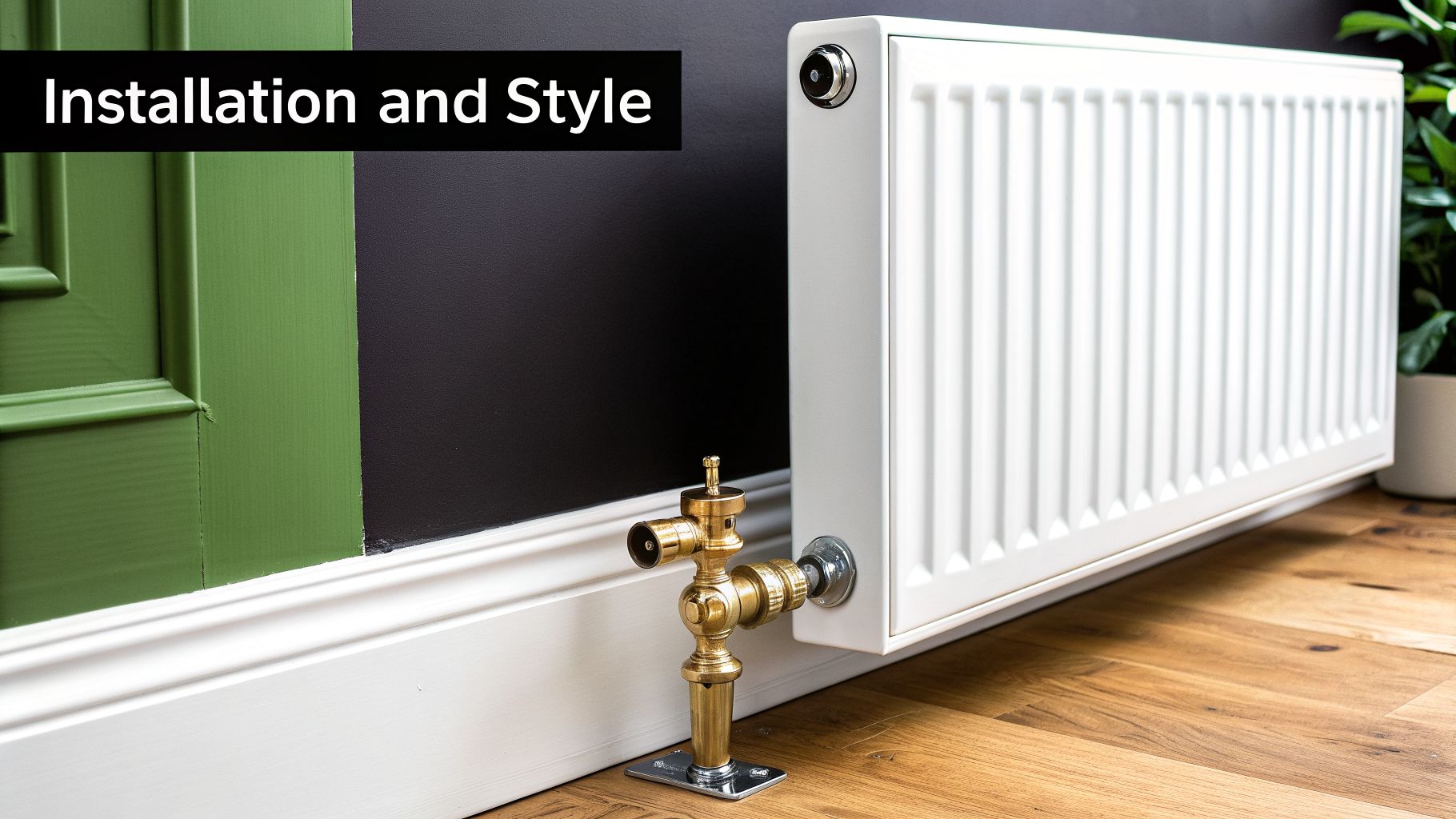
Fitting a Type 33 radiator involves more than just plumbing it in; it's about making sure it’s secure, efficient, and looks right in your room. Getting these details right from the start is key.
The first practical step is checking your wall. A Type 33 radiator is heavy – much heavier than a single or double panel model – because it holds more water and has that third panel and set of fins. You must be certain your wall can handle the weight.
For solid masonry walls, this is rarely an issue. If you have plasterboard walls, however, you absolutely must fix the radiator's brackets directly into the wooden studs for a secure mount.
Getting it Installed
Because of the weight and the need for a perfect, leak-free connection to your heating system, we strongly recommend using a professional plumber. A qualified installer will ensure the radiator is mounted safely and integrated correctly, giving you complete peace of mind.
Matching Style with Performance
With the practical side sorted, you can think about the aesthetics. A Type 33 can either be a subtle part of your décor or a standout feature.
- Classic White: A crisp, clean white finish is a timeless choice. It blends in effortlessly with almost any wall colour and interior design scheme.
- Modern Anthracite: For a more contemporary and bold statement, a dark grey or anthracite finish is perfect. It works brilliantly in industrial-style rooms or as a sharp contrast against a light-coloured wall.
More and more homeowners are choosing radiators that complement their interior design. The UK designer radiator market has seen huge growth, with revenues projected to climb from USD 236.7 million in 2021 to an estimated USD 322.6 million by 2030.
The Finishing Touches
Don't let your radiator valves be an afterthought. They're the final piece of the puzzle that completes the look and, more importantly, controls your radiator's performance. Swapping out basic valves for stylish designer models in chrome, black, or brass can make a huge difference.
Crucially, fitting Thermostatic Radiator Valves (TRVs) is a must for managing comfort and energy bills. TRVs let you control the temperature of each room individually, which stops you from wasting energy by overheating empty spaces. It's a simple change that can lead to real-world savings of around 3%.
For a complete rundown on getting the right hardware, have a look at our guide on pipe sizes and radiator valves.
Maintaining Your Radiator for Peak Performance
Once your new radiator is installed, a little upkeep goes a long way. This is especially true for a powerful model like a Type 33, where simple maintenance ensures it delivers maximum heat and efficiency for years to come.
A good starting point is the manufacturer's warranty. Reputable brands typically offer a 5 to 10 year guarantee, which is a great indicator of build quality and long-term reliability.
Practical Maintenance Tips
A few straightforward tasks will keep your heating system in top condition. The most important is bleeding your radiators periodically.
If you notice cold spots at the top of a radiator while the bottom is hot, it means air is trapped inside. This trapped air stops hot water from circulating properly and drastically reduces the heat output.
Bleeding a radiator is a simple but vital job. Releasing the trapped air restores its full heating power, ensuring you get all the warmth you’re paying for and stopping your boiler from working harder than necessary.
Regular cleaning is also key. For the outer surface, a quick wipe with a soft, damp cloth is all you need. It’s best to avoid abrasive cleaners or scouring pads, as these can easily damage the paint or finish.
To clean between the panels and fins of a Type 33 radiator, a long, thin radiator brush is the perfect tool. It helps you clear out any dust that can build up and restrict airflow.
Finally, check that your valves are working correctly. If you want to understand more about getting the most from your system, our guide on what Thermostatic Radiator Valves are explains how they can improve comfort and save you money.
Frequently Asked Questions About Type 33 Radiators
Still have a few questions about whether a Type 33 is right for you? It’s a big decision, so we’ve put together some straightforward answers to the most common queries we hear from customers.
Are Type 33 Radiators Energy Efficient?
Yes, but only if they’re the right size for the room. A correctly chosen Type 33 radiator has a massive heat output, so it gets a room up to temperature much faster than a smaller radiator would.
This means your boiler doesn’t have to run for as long, which ultimately saves energy.
The key to real efficiency is pairing your Type 33 radiator with a Thermostatic Radiator Valve (TRV). A TRV automatically stops the flow of hot water once the room hits your target temperature, preventing overheating and ensuring you don't waste a single penny on heat you don't need.
Will a Type 33 Fit My Existing Pipework?
In most cases, yes. Radiator pipe connections are generally a standard size here in the UK. The bigger concern isn't the pipes, but the radiator's depth and weight.
First, check you have enough room for it to project from the wall without getting in the way. Second, remember that a Type 33 radiator is much heavier than a single or double panel model. You absolutely must make sure your wall is strong enough to support it safely. Always double-check the product's dimensions and weight before buying.
Is a Type 33 Radiator Too Powerful for a Small Room?
Almost certainly, yes. Installing a Type 33 radiator in a small space like a box room, home office, or bathroom is what we'd call "oversizing."
The room would get uncomfortably hot far too quickly, and the system would constantly be turning on and off to compensate. This is incredibly inefficient. For smaller, well-insulated rooms, a Type 11 or Type 21 radiator will give you a much more balanced, comfortable, and economical performance.